




Driver Shortages and Haulage Protests in Southern Italy: What’s Happening to Italian Logistics?
Anyone working in logistics knows that when a truck comes to a standstill, the impact goes far beyond a single vehicle being taken off the road. It can disrupt an entire chain of deliveries. In recent months, Italy’s road transport sector has come under pressure from two distinct but interconnected challenges: a long-standing shortage of professional drivers and, more recently, protests by hauliers over rising diesel prices.
To understand the bigger picture, we’ll start with the figures across Europe before taking a closer look at the situation in Italy.
Europe’s Truck Driver Shortage: The Figures
According to the International Road Transport Union’s (IRU) 2025 survey, 13% of truck driver positions across Europe remain unfilled, representing approximately 502,000 vacancies. This marks an increase from the 12% recorded in the previous survey. The IRU also reports that driver shortages are the primary concern for 65% of European transport operators.
And there is little indication that the situation will improve any time soon. Around 20% of Europe’s truck drivers are expected to retire within the next five years, while those under 25 account for just 5% of the workforce and women represent only 4%.
These figures highlight a problem that goes beyond fluctuations in transport demand. The industry is struggling to attract a new generation of drivers to replace those approaching retirement.
Truck Driver Shortages in Italy: A Structural Challenge
In Italy, industry associations estimate that the country is short of between 20,000 and 25,000 truck drivers, depending on the source and methodology used. One estimate from ANITA Confindustria, published in July 2026, puts the shortfall at approximately 20,000 drivers. Although these figures are indicative, they all point to the same underlying trend.
Perhaps the most telling figures concern the age of the workforce. Drivers under 25 account for just 2.2% of Italy’s professional drivers, while the average age is over 50, compared with approximately 47 across Europe.
Several factors are contributing to the problem: an ageing workforce with too few younger drivers entering the profession, the cost of obtaining the necessary driving licences and professional qualifications, and a demanding lifestyle involving long periods away from home, often without sufficient financial compensation.
As a result, even when demand for road transport is strong, operators cannot always secure enough drivers to meet it.
Haulage Protests Across Southern Italy
Against this already challenging backdrop, a new wave of disruption has emerged in recent weeks.
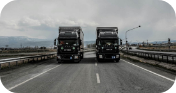
In October 2026, protests by hauliers and farmers against rising fuel costs began in Puglia and Calabria before spreading to Sicily, Basilicata, Campania and Molise. Demonstrations included roadside protests, roadblocks and vehicles being taken out of service.
At the heart of the unrest is the rising cost of diesel, further compounded in recent months by the international crisis surrounding the Strait of Hormuz and an increase in diesel excise duty.
For haulage companies, whose operations depend heavily on fuel consumption, even relatively small price increases can have a significant impact on day-to-day operating costs.
Some Sicilian hauliers have estimated losses of between €700 and €900 per day for every vehicle left idle. The figures underline the financial pressure facing the sector, including those operators choosing to take part in the protests.
How the Authorities Have Responded
The Italian government had already introduced a tax credit covering up to 70% of the additional fuel costs incurred between March and August 2026, calculated against February prices.
On 22 October, the Council of Ministers approved a further emergency decree providing €175.2 million in financial support. Of this, approximately €105 million was allocated to road haulage, €60 million to agriculture and €10 million to fisheries.
In the days that followed, most roadblocks were lifted across the affected regions. A meeting between industry representatives and the Ministry of Infrastructure and Transport also took place on 27 October.
However, the situation remains fluid, making it essential for businesses to monitor developments before arranging shipments.
The Impact on Logistics and How to Protect Your Shipments
So, what has all this meant in practical terms?
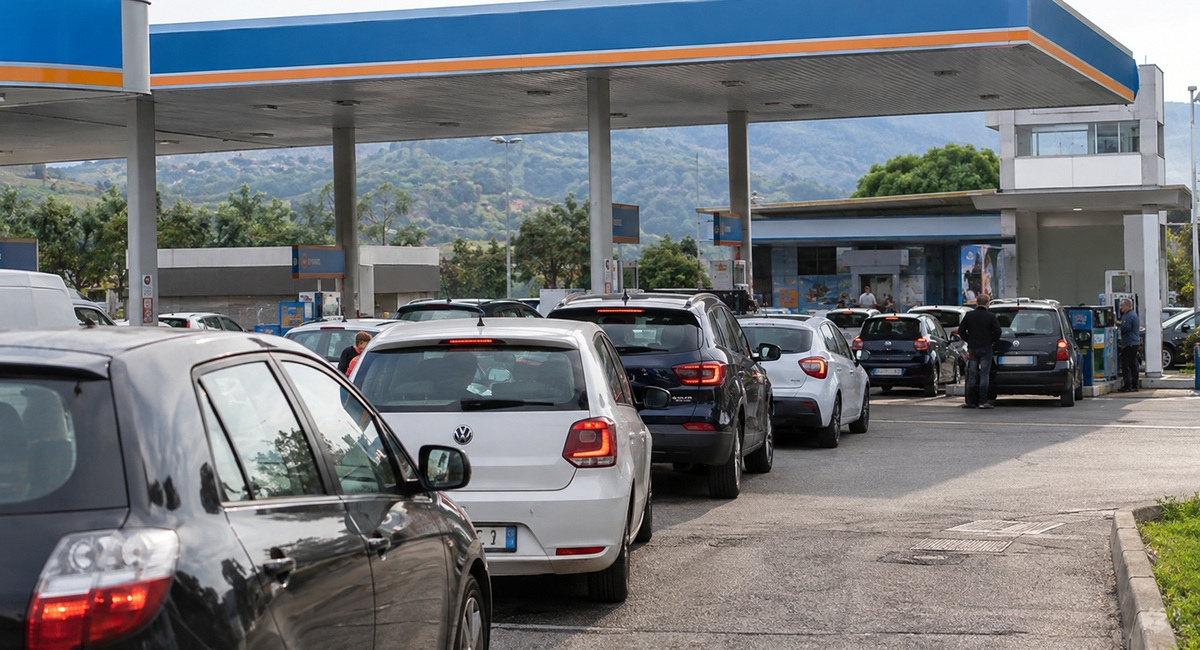
At the height of the disruption, several regions reported empty supermarket shelves, fuel shortages at filling stations, delayed deliveries and difficulties maintaining regular supplies. Ports and maritime connections were also affected.
Eni reported that approximately 150 of its 300 Enilive filling stations in Puglia had run out of fuel.
For businesses managing export shipments, the disruption has also made collection and delivery schedules increasingly difficult to predict.
It is important, however, to distinguish between the immediate effects of the protests and the wider challenges facing the industry. While the disruption caused by roadblocks may be temporary, the shortage of professional drivers will not disappear once the demonstrations end. It remains a structural constraint on road transport capacity.
This means businesses need to allow for greater uncertainty, not only on the road but throughout the wider supply chain.
The most effective approach is to plan shipments further in advance, assess alternative transport modes and routes, and maintain close communication with your freight forwarding partner.
If your business has shipments travelling to or from Southern Italy and you want to minimise the risk of delays, get in touch with CTI.
Our team is on hand to assess your requirements and provide tailored advice on the most suitable transport and logistics solutions for your business.