



Iran Conflict and Hormuz Blockade: Global Logistics Impacts

05.03.2026
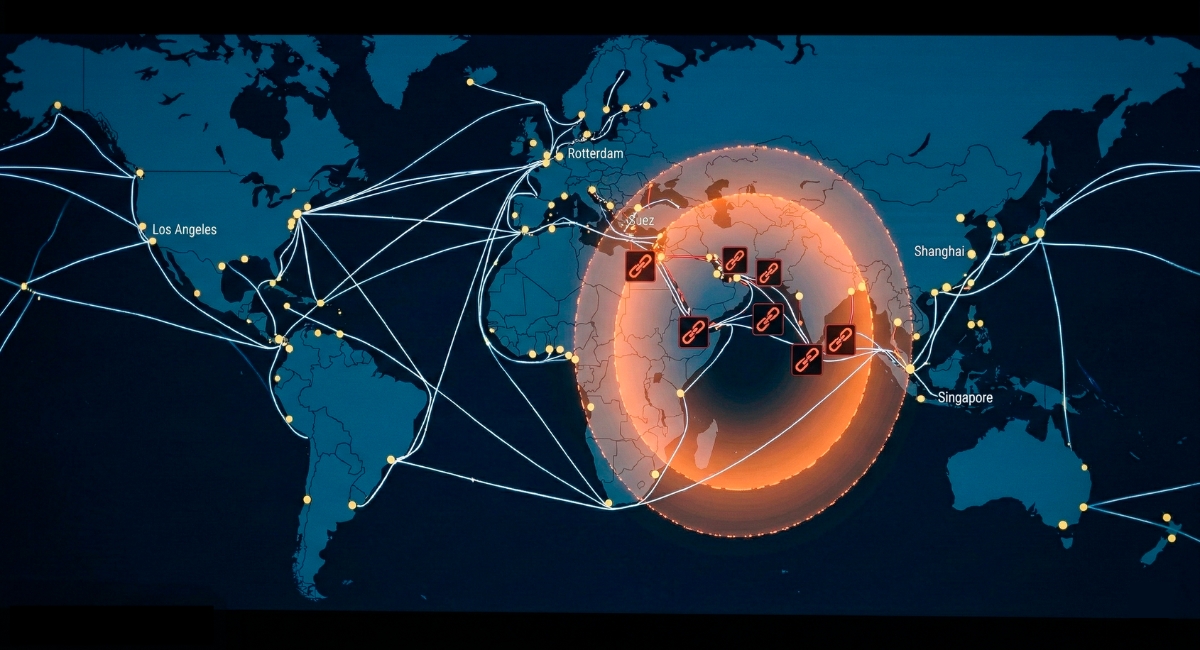
Global map with highlighted logistics routes, highlighting the epicenter of the war in Iran, underlining the blockade of the Strait of Hormuz and the consequences for the logistics sector

The war between Iran, the United States, and Israel is already reshaping operating conditions in the Gulf in real-time, particularly regarding transit continuity, capacity availability, and cost resilience. From the very first day of the conflict, logistics entered “crisis mode,” driven by two critical factors: the strategic importance of the Strait of Hormuz for global energy flows and the speed at which maritime security was reclassified as a high-risk area.

The environment, however, had been deteriorating for months. The escalation between Israel and Iran in June 2025 served as a significant precedent, with military actions and retaliations raising regional alert levels, especially for critical infrastructure and transit corridors.

February 28, 2026, marks the beginning of this new phase: the USA and Israel initiated hostilities with a coordinated strike against targets in Iran, and the Iranian response had an immediate impact on commercial traffic. Maritime security sources (JMIC via UKMTO) reported missile and drone attacks against merchant vessels in the Gulf and the approaches to Hormuz, elevating the regional risk level to CRITICAL.

From this point forward, the focus is no longer on the geopolitical outcome, but on what happens to supply chains when such a vital artery becomes unstable. We will focus on these consequences and the most plausible short-term scenarios in the following sections.

Closure of the Strait of Hormuz: What to Expect?

The escalation in Hormuz is already having a measurable effect on logistics fundamentals: energy costs, bunker prices, operational risk, and tonnage availability. Reuters notes that approximately one-fifth of the world’s daily oil consumption passes through the Strait; this is why the market immediately prices in any security downturn.

Regarding the closure, two levels currently coexist. Iran has announced a blockade and threatened the use of force against vessels attempting to transit. While maritime security operations centers (JMIC via UKMTO) have not confirmed a formally recognized closure, they describe an environment where attacks on commercial units have already occurred and where the regional risk is classified as CRITICAL. MARAD, for its part, recommends avoiding the area whenever possible.

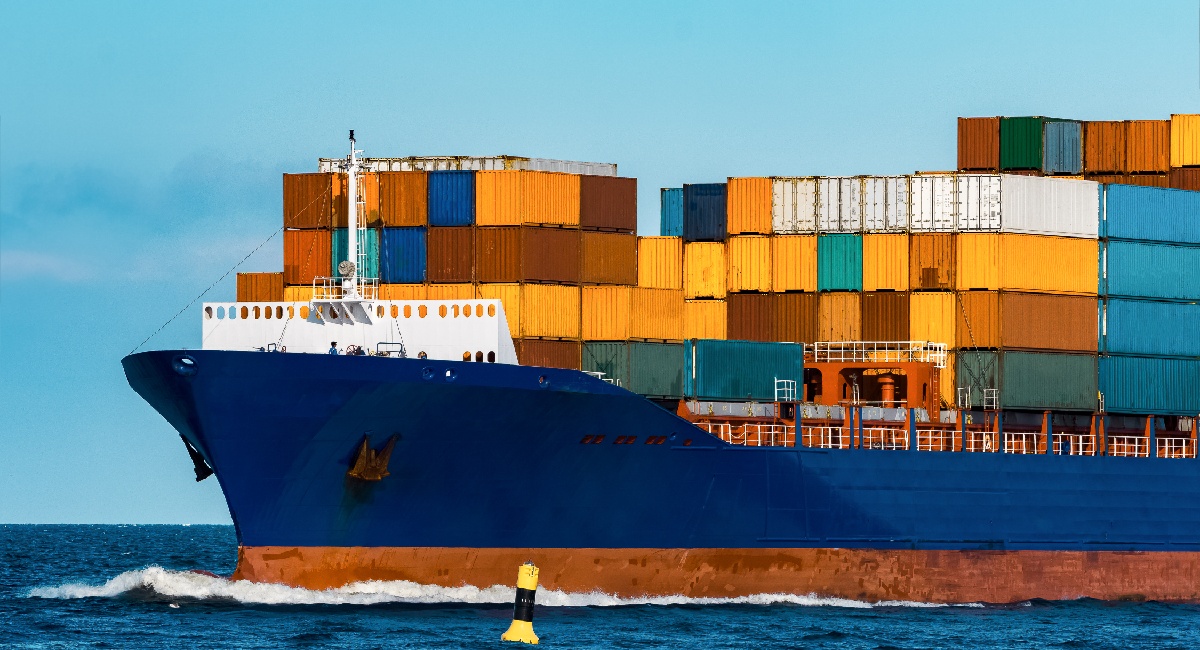
For container shipping managers, the reality is that the route becomes unstable even without a total blockade. We are entering a regime where ETAs lose reliability as conservative decision-making increases: waiting periods, rescheduling, port rotation changes, speed reductions, or postponed transits. This immediately impacts schedule reliability and shifts operations from standard planning to exception management.

Fuel is the second variable moving rapidly. If the risk remains elevated, the risk premium is reflected in energy and bunker prices, eventually trickling down into freight rates via fuel adjustments and extraordinary security surcharges. While the effect is most direct on routes connected to the Gulf, the pressure on bunker prices tends to propagate further, as it affects operating costs across a wide range of services.

Finally, there is the issue of capacity. In high-risk areas, commercially available capacity no longer aligns with nominal capacity: some services are scaled back, certain bookings are restricted, and space availability becomes more selective. At that point, prices react as the market always does when effective supply tightens.

Airspace Restrictions and Hub Fragmentation

The first logistical consequence of the conflict was the fragmentation of airspace into a sequence of short-notice closures and restrictions, with immediate effects on flight frequencies, routing, and cargo capacity. On February 28, EASA issued a Conflict Zone Information Bulletin for the Middle East and the Persian Gulf, which was later extended on March 2 until March 6, designating the area as high-risk for flight operations.

The market impact was seen in the suspension and cancellation of connections to various hubs in the Gulf and the Levant, with partial resumptions being continuously recalibrated based on the security situation. Reuters has documented decisions by multiple international carriers to halt or reduce operations.

For international logistics, the bottleneck is effectively usable capacity: as belly capacity and frequencies are reduced, cargo space contracts and concentrates on alternative corridors that are longer and more saturated, putting pressure on spot rates and confirmation reliability. The impact on container shipping is indirect but operational: a portion of urgent cargo shifts back to sea freight, while reduced air connectivity complicates exception management, particularly for critical spare parts and components. Should this disruption persist, it is reasonable to expect higher costs for urgent shipments and less stable delivery windows for supply chains that utilize the Gulf as a hub or transit corridor.

Booking Embargoes and Supply Chain Contraction

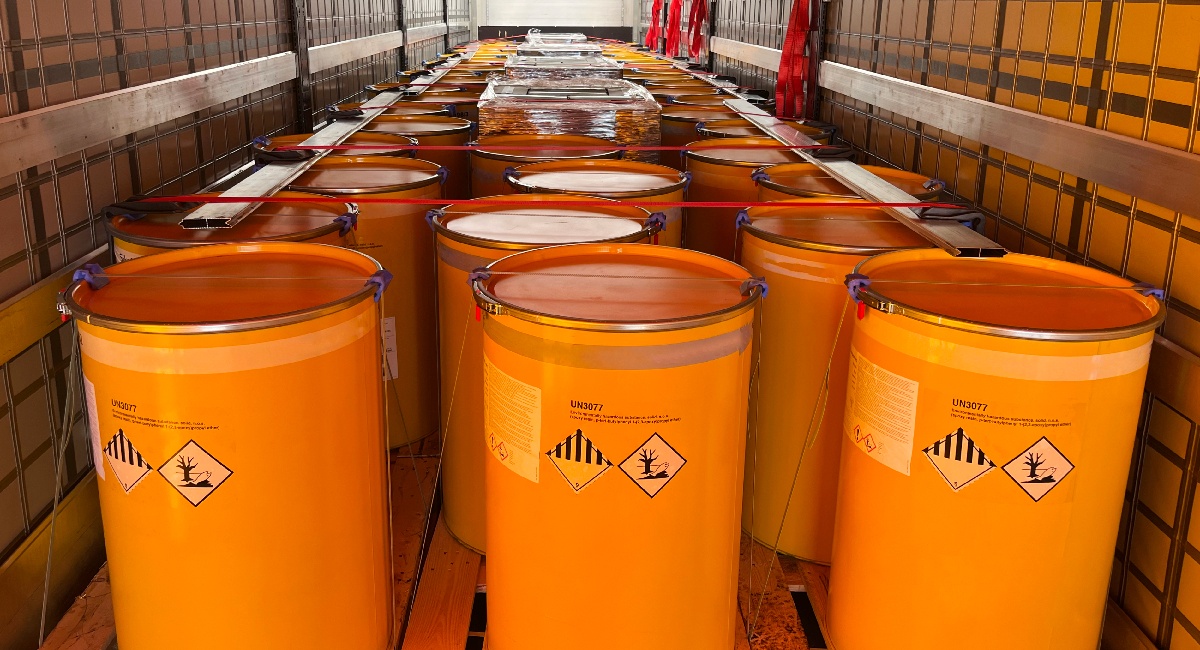
In the Gulf, the impact is already visible in carrier policies. Maersk has suspended the acceptance of reefers and certain categories of special or dangerous cargo to and from several countries in the area, directing customers toward alternative solutions where available. Hapag-Lloyd has suspended reefer bookings to and from the Upper Gulf, Arabian Gulf, and Persian Gulf, signaling possible operational repercussions on vessel movements and regional port activities.

These measures reduce effectively usable supply and increase cargo selectivity, particularly for goods with higher operational complexity. Reuters reported that a significant portion of the container fleet is slowed down or held up in the Hormuz area, and some carriers have suspended direct bookings to the Middle East, risking backlogs and delays at connecting ports.

For shippers, the immediate effect is increased instability regarding confirmations and ETAs. Rolled cargo becomes more likely, and shipments are frequently pushed to subsequent departures. Beyond freight rates, risk-related components are rapidly being introduced. Hapag-Lloyd has announced a War Risk Surcharge applied to cargo to, from, or transiting through the Gulf area. In this phase, service continuity is what matters most, utilizing sustainable routing and lead times realigned to current operating conditions.

Insurance Markets and Underwriting in Conflict Zones

In an area classified as high-risk, service continuity depends first and foremost on insurability. If war risk coverage is canceled or renegotiated under prohibitive conditions, the route remains theoretically navigable but becomes commercially fragile. Currently, the difference between operating and halting often depends on premiums, deductibles, coverage limits, and requirements imposed by shipowners, charterers, and financiers.

In recent days, several insurers have issued notices of cancellation for war risk coverage in the region. Gard issued a notice of cancellation, and Skuld published a similar communication, taking effect after the standard notice window indicated in their respective circulars. Reuters has linked this move to a spike in insurance premiums and a further slowdown in operations, particularly in the Gulf.

Operationally, cancellation does not mean an absolute absence of coverage. It means a reopening of negotiations on short notice, resulting in more expensive and selective conditions. Simultaneously, the relevance of the contractual framework grows, as many transport and chartering structures include deviation or cancellation clauses when a route is deemed unsafe. Gard, in its analysis of the contractual and insurance implications of the conflict, highlights how the evolution of coverage impacts operational decisions and liability management.

For container shipping, the effects on costs and capacity are immediate. Costs rise due to the insurance component and tend to be reflected in surcharges or more rigid pricing terms. Capacity becomes less elastic as part of the supply is reallocated or operates under constraints that reduce commercial flexibility, leading to greater variability in ETAs and delivery windows.

The situation remains highly volatile. The IMO urges maximum caution and, where possible, recommends avoiding transit in the region until conditions improve. In this context, effective management relies on frequent updates regarding available coverage and carrier policies, alongside planning that incorporates realistic margins for both time and cost.

At CTI, we daily monitor carrier operational updates, maritime security center directives, and signals from the insurance market. If you have shipments in progress or planned for corridors connected to the Gulf, we encourage you to contact us for a precise assessment of the impact on timing and costs, and to define a shipping strategy consistent with the evolving risk.

EU–India Free Trade Agreement: what It provides and why it matters for international trade

25.02.2026
juxtaposition of the two flags of the EU and India to symbolize the new free trade agreement between the two countries

At the end of January 2026, the European Union and India announced the conclusion of negotiations for a Free Trade Agreement (FTA) that, given the scale of the economies and populations involved, is set to significantly reshape global trade routes. This is not merely about “cutting tariffs”: it is about making it easier, more predictable, and often faster to buy and sell between two markets that are already highly interconnected, yet still constrained by high duties and administrative procedures that are not always straightforward.

Where we stand and what truly changes

To begin with, it is worth clarifying that the agreement follows a lengthy process: negotiations began in 2007, were subsequently suspended, and resumed in 2022, leading to the political conclusion reached in January 2026.

As for what will concretely change, EU institutions refer to a very broad liberalisation. In essence, India will eliminate or reduce tariffs on a substantial share of European exports; on the EU side, market access for Indian products will become easier across a large number of tariff lines. The European Commission also highlights the expected economic impact: the agreement is projected to significantly boost EU goods exports to India by 2032 and generate annual tariff savings of approximately €4 billion.

Tariffs, services and rules: the agreement’s key levers

Historically high tariffs on many product categories have made India a “promising yet demanding” market for numerous European companies. The FTA addresses precisely these obstacles through tariff reductions, streamlined procedures, and a more stable framework for exporting. For instance, the Commission’s Q&A document refers to substantial cuts for sectors such as machinery, chemicals and pharmaceuticals, as well as a marked tariff reduction path for automobiles, including tariff-rate quotas.

In addition, there is a services chapter of considerable value for companies operating within international supply chains: more predictable access to the Indian market in areas such as financial and maritime services, with commitments described as “ambitious” by the Commission.

There is also a topic that is often underestimated until goods are actually shipped: rules of origin. These determine when a product can benefit from preferential tariff treatment. In other words, simply routing goods through India or the EU is not sufficient; substantial transformation and proper documentation are required, precisely to prevent circumvention through triangular trade.

What does the EU import from India?

Official figures are instructive: in 2024, the EU imported goods from India worth approximately €71.3 billion, reflecting growth compared to the previous year.

In terms of composition, the most significant categories include machinery and transport equipment, chemicals, metals and semi-finished products, mineral products, and textiles.

What does the EU export instead?

Conversely, in 2024 the EU exported approximately €48.8 billion worth of goods to India.

The main categories are consistent with Europe’s industrial specialisation: machinery and equipment, transport equipment, and chemical products. This underscores a practical point: the agreement is not merely about “more trade”, but about trade that is often technology-intensive, where customs clearance times, certifications and logistical reliability make a decisive difference.

Impacts on international logistics and container shipping

What does this mean in practical terms for those moving goods? If tariffs decline and procedures become simpler, trade flows are likely to increase, placing additional pressure on ports, feeder services, inland terminals and warehouses, particularly along Asia–Europe routes. At the same time, three operational aspects become even more critical: accurate customs classification, management of preferential origin, and meticulous document planning, since access to FTA benefits depends precisely on these elements.

Another key factor is predictability. A “modern” agreement seeks to reduce the grey areas created by divergent interpretations, additional requests and variable timelines. For companies shipping containers on a regular basis, this often translates into fewer unexpected delays and improved arrival planning—especially when production windows or just-in-time deliveries are involved.

Sustainability, labour and compliance

The FTA also includes commitments on trade and sustainable development: environment, climate, labour rights and enforcement mechanisms. It is important to remember that these chapters are not merely symbolic; over time, they can influence traceability requirements and controls throughout the value chain.

Moreover, for many European companies, compliance is already a daily reality involving declarations, audits and supply chain standards. The agreement may facilitate increased sales, but it does not replace the need for robust oversight of documentation and processes.

How to prepare for the EU–India agreement: practical advice

First and foremost, it is advisable to map products and routes: which customs codes, which Incoterms, which facilities and which processing stages affect origin. It is also worth noting that India and the EU already maintain significant volumes: in 2024, bilateral trade in goods reached approximately €120 billion. The agreement therefore builds on a concrete foundation, not on an abstract promise.

Finally, turning the FTA into a competitive advantage requires strong logistical coordination: port selection, transit times, buffer stocks and, above all, structured customs management without improvisation. If you would like to understand how the EU–India agreement may impact your shipments, costs, timelines and documentation, do not hesitate to contact CTI. We can help you interpret the new landscape and develop a tailored operational strategy, supporting you step by step—from customs consultancy through to container shipment planning.

Italy’s 2026 Budget Law: practical impacts on transport and logistics

28.01.2026
Italian flag overlaid on a financial chart and coins, representing the key changes introduced by Italy’s 2026 Budget Law for the transport and logistics sector.

Italy’s 2026 Budget Law, published in the Official Gazette on 30 December 2025, introduces a set of measures which, while not radically reshaping the regulatory framework, bring relevant operational and tax changes for logistics and transport companies. The approved provisions have a tangible impact on operating costs, investment opportunities, employment and financial management across the road haulage, intermodal and logistics services supply chain.

In this article, we analyse these developments from an operational perspective, with a practical focus for professionals working daily in the supply chain.

What does the 2026 Budget Law provide for?

With specific reference to logistics, the 2026 Budget Law (Law No. 199 of 30 December 2025) outlines a package of measures affecting road freight transport, integrated logistics and related infrastructure. The stated objective is twofold: on the one hand, to rebalance certain fiscal mechanisms; on the other, to stimulate investment and innovation. As is often the case, however, new opportunities are accompanied by additional costs and constraints. As a result, companies are once again required to reassess both their operational and financial strategies.

Fuel excise duties and operating costs

The most sensitive issue for the sector remains fuel excise duties. The alignment between petrol and diesel sets the rate at €672.90 per 1,000 litres for both products, implying an increase of approximately 4.05 euro cents per litre on diesel. Including 22% VAT, the actual increase exceeds 4.9 euro cents per litre.

In practical terms, this means that diesel loses the historic tax advantage it has enjoyed for years and becomes significantly more expensive for operators running diesel fleets. For road haulage companies — particularly those involved in container pre-haulage and post-haulage — the impact is immediate: per-kilometre costs rise, margins are squeezed, and the sustainability of long-term contracts comes under pressure.

At the same time, the measure is part of a broader environmental strategy aimed at phasing out environmentally harmful subsidies. This once again highlights how the green transition is also being driven through fiscal policy, with direct consequences for the supply chain.

How do ZES and ZLS work under the 2026 Budget Law?

On the investment side, the law confirms and strengthens incentives for Special Economic Zones (ZES) and Simplified Logistics Zones (ZLS). These instruments serve both fiscal and strategic purposes. ZES and ZLS effectively act as levers to reshape Italy’s logistics geography, supporting the development of inland ports, intermodal platforms and freight consolidation hubs.

In particular, the related tax credit enables companies to plan investments in logistics real estate, automated facilities and container-handling infrastructure. This shows that, at least in this area, industrial policy is attempting to support a long-term vision. However, real effectiveness will depend on the ability to connect these sites to rail and port networks, preventing them from becoming isolated projects with limited operational value.

In addition, incentives for capital goods linked to digitalisation and Industry 4.0 systems offer a concrete opportunity to modernise warehouses, terminals and distribution centres. This is not merely about tax savings, but about a necessary step towards a more transparent, traceable and integrated supply chain.

Infrastructure and digital systems

With regard to the digitalisation of transport and logistics systems, the law allocates dedicated funding to RAM S.p.A., a key player in the policies of the Ministry of Infrastructure and Transport. This is a less visible, yet highly strategic aspect. RAM is involved in projects related to intermodality, the National Logistics Platform and incentives for combined transport.

Through these investments, the digital backbone connecting ports, inland terminals, rail networks and logistics operators is strengthened. In other words, this is not just about software platforms, but about building the nervous system of the Italian supply chain. Without such digital integration, even the best physical infrastructure risks operating below its full potential.

A budget balancing costs and opportunities

Overall, the 2026 Budget Law paints a picture of mixed signals. On the one hand, higher diesel excise duties significantly increase supply chain costs. On the other, incentives for investment, digitalisation and logistics settlements open up attractive opportunities for companies able to plan with a medium- to long-term perspective.

While this is not a landmark reform, the cumulative effect of these measures will substantially influence how Italian logistics can compete in international markets.

It should also be noted that the 2026 Budget Law addresses other transport-related areas, such as taxation on low-value international shipments, organisational measures for maritime and rail services, and specific interventions on infrastructure and network safety. Although relevant from a regulatory and administrative standpoint, these provisions have a more limited direct impact on containerised supply chains. For this reason, our analysis has focused on the elements with the most immediate effects on costs, investment and competitiveness.

Ultimately, the real challenge for companies is not merely to comply with the new rules, but to turn them into strategic levers. Understanding where to invest, how to manage costs and which opportunities to seize becomes essential to remain competitive.

If you would like to explore how these provisions apply to your specific business context and receive tailored advice, do not hesitate to contact CTI. Our team of experts is available to support you in interpreting the legislation and designing customised operational solutions.

Staff shortage: one of the main problems in Italian logistics

29.12.2025
A woman employed in the logistics sector leafing through papers, facing the problem of the lack of qualified personnel.

In Italia, la logistica vale oltre 90 miliardi di euro all’anno. Si può dire sia a tutti gli effetti la spina dorsale dell’economia, con un ruolo decisivo soprattutto per export e filiere manifatturiere. Negli ultimi anni, però, un tema sempre più centrale è la difficoltà crescente nel trovare personale qualificato, elemento fondamentale per il corretto funzionamento del settore. 

Infatti, secondo l’Osservatorio Contract Logistics “Gino Marchet” del Politecnico di Milano, a fronte di circa 4,6 milioni di ricerche di candidati effettuate dalle imprese, oltre 800mila posizioni legate alla logistica sono rimaste scoperte. Il 40% delle figure richieste è considerato di “difficile reperibilità”, contro il 27% di tre anni fa. Un salto che segnala uno shortage ormai strutturale e non più legato a fasi congiunturali.

Inoltre, va fatto notare che questo fenomeno si inserisce in un quadro nazionale già critico: i bollettini del Sistema informativo Excelsior di Unioncamere indicano che quasi una assunzione su due prevista dalle imprese italiane è oggi difficile da coprire, con percentuali particolarmente elevate proprio nei servizi di trasporto e magazzinaggio.

Le figure più introvabili

Le associazioni di categoria parlano apertamente di “emergenza autisti”. Secondo le stime di Confetra, in Italia mancano oltre 22mila conducenti di camion, mentre altre rilevazioni confermano un fabbisogno strutturale superiore ai 20mila posti vacanti nell’autotrasporto. Il problema non riguarda solo la lunga percorrenza: sono difficili da reperire anche magazzinieri specializzati, addetti alla consegna e operatori dell’ultimo miglio, figure decisive per garantire tempi di consegna rapidi e servizi affidabili ai clienti.

In aggiunta, anche il trasporto ferroviario merci soffre di una significativa carenza di personale. Confetra stima che nei prossimi tre anni serviranno circa 3mila nuovi macchinisti, pari a un quinto dell’attuale forza lavoro del comparto. L’Osservatorio Logistica e Trasporti di ANSI segnala inoltre che, complessivamente, mancano all’appello oltre 60mila lavoratori rispetto alle esigenze delle imprese, con i maggiori squilibri concentrati su magazzino, movimentazione interna e trasporto. 

Le cause dello shortage

Le cause di questa carenza sono molteplici. I report di settore, per l’appunto, sottolineano da un lato la trasformazione digitale della supply chain, che richiede competenze sempre più avanzate in ambito IT, analisi dei dati e automazione, e dall’altro un’offerta formativa che fatica a tenere il passo, soprattutto sugli indirizzi tecnici e STEM. A questo si aggiungono il ricambio generazionale incompleto, i costi elevati per ottenere patenti e abilitazioni professionali e una percezione del lavoro nella logistica come “faticoso” e poco attrattivo per i più giovani, soprattutto a causa della grande mobilità che spesso comporta questo settore. 

Come fronteggiare questo problema?

Lo shortage di personale non è più un tema circoscritto alle risorse umane, ma una sfida che impatta direttamente sulla continuità operativa e sulla capacità delle aziende di rispondere alle richieste del mercato. In un contesto così dinamico, non esistono soluzioni uniche o immediate: ogni impresa è chiamata a trovare un equilibrio tra competenze disponibili, organizzazione interna e sostenibilità dei costi.

Sempre più spesso la differenza la fanno la capacità di adattamento, la valorizzazione dell’esperienza maturata sul campo e la costruzione di rapporti di lavoro stabili e affidabili. Investire sulle persone, migliorare i processi e rendere il settore più attrattivo resta una priorità, ma richiede tempo, visione e un approccio concreto, calibrato sulla realtà di ciascuna azienda.

Come si muove CTI in questo contesto?

Vi proponiamo ora una breve intervista in cui il nostro team spiega le dinamiche dell’attuale contesto logistico italiano dal punto di vista di CTI.

1. Anche CTI soffre per via dello shortage di personale? Quali strategie adotta l’azienda per fronteggiare questo problema?

Sì, come molte aziende del settore anche CTI si confronta quotidianamente con la difficoltà di reperire personale qualificato, soprattutto in ambiti operativi e logistici. Non si tratta solo di una questione numerica, ma di trovare persone con competenze adeguate, affidabili e capaci di gestire la complessità del lavoro. La nostra risposta, più che basarsi su soluzioni strutturate o standardizzate, è stata finora molto pragmatica: puntiamo sulla continuità, sulla fidelizzazione delle persone e su un’organizzazione flessibile, cercando di valorizzare l’esperienza interna e di costruire rapporti di lavoro stabili. In un contesto così complesso, riteniamo che la qualità delle persone e la capacità di adattarsi contino più di qualsiasi formula preconfezionata.

2. In che modo la carenza di personale incide sull’organizzazione operativa delle aziende?

La carenza di personale ha un impatto diretto sull’organizzazione del lavoro e sulla pianificazione delle attività. Le aziende sono chiamate a gestire risorse limitate garantendo al tempo stesso continuità, flessibilità e qualità del servizio. Questo richiede una maggiore attenzione ai processi interni e una capacità di adattamento costante alle condizioni operative.

3. Quali sono, secondo la vostra esperienza, i principali problemi del settore della logistica in questi ultimi anni?

Negli ultimi anni il settore della logistica è diventato sempre più complesso e imprevedibile. Alla carenza di personale si sono aggiunti fattori come l’aumento dei costi, le difficoltà legate alle catene di approvvigionamento, una burocrazia spesso onerosa e clienti sempre più esigenti in termini di tempi, flessibilità e affidabilità del servizio.

In questo scenario, le aziende si trovano a dover gestire un equilibrio delicato tra efficienza operativa e sostenibilità, spesso con margini di manovra ridotti. La vera sfida oggi non è solo crescere, ma riuscire a mantenere stabilità e qualità del servizio in un contesto in continua evoluzione.

4. Quanto conta oggi l’esperienza rispetto alla formazione nel settore della logistica?

Nel settore della logistica l’esperienza sul campo resta un elemento determinante. Molte competenze si acquisiscono solo attraverso il lavoro quotidiano, la gestione degli imprevisti e la conoscenza diretta dei processi. La formazione è importante, ma senza un percorso pratico e di affiancamento diventa difficile colmare il divario tra teoria e operatività.

5. Ormai l’anno è quasi concluso: quali sono le vostre previsioni (e speranze) per il 2026 e gli anni a seguire?

Guardando al futuro, l’auspicio è quello di una maggiore stabilità, sia dal punto di vista del mercato sia della disponibilità di competenze. Il settore logistico resterà centrale per l’economia italiana e per l’export, ma sarà sempre più importante affrontare la crescita in modo sostenibile e consapevole. Per CTI i prossimi anni saranno soprattutto anni di consolidamento. In una fase in cui il contesto resta complesso e incerto, riteniamo fondamentale lavorare con realismo, attenzione e responsabilità. La priorità sarà continuare a garantire affidabilità e qualità del servizio, adattandoci progressivamente alle evoluzioni del mercato.

Italy–Chile: what the new EU agreements mean for international logistics

26.11.2025
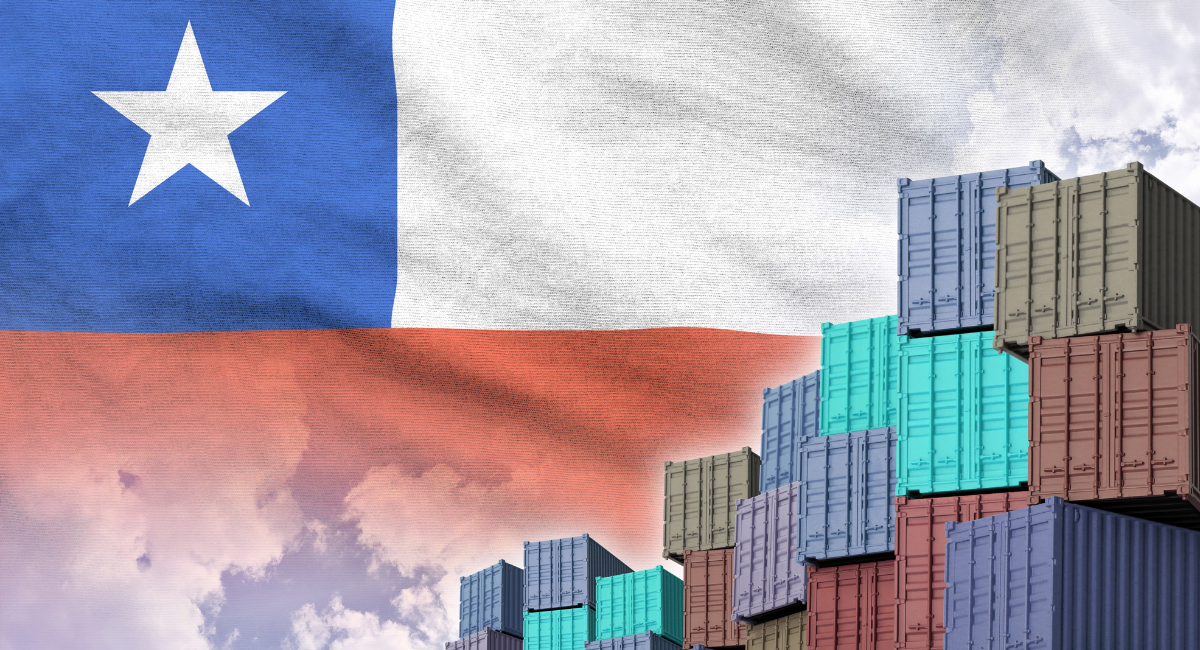
Conceptual image of a large Chilean flag with containers standing out, to symbolize the new EU-Chile agreements of February 2025.

From 1 February 2025, the EU–Chile Interim Trade Agreement (ITA) has been in force. It updates the old 2002 agreement and, more importantly, gets very concrete on issues that matter to anyone shipping goods: tariffs, rules of origin, customs documentation and access to the services market. For Italy – Chile’s 10th largest supplier worldwide and 3rd within the EU (after Germany and Spain) – this is a strategic game: smoother customs clearance means more predictable lead times and lower costs along the entire logistics chain.

On top of that, from 1 June 2025 some chapters of the new EU–Chile Advanced Framework Agreement (AFA) – the broader political and cooperation “umbrella” that sits alongside the ITA – entered into provisional application. This widens the scope to sustainability, digital, energy and institutional cooperation. In other words, we’re not just talking about tariffs any more; we’re talking about the whole ecosystem underpinning a modern supply chain.

Let’s take a closer look at the different areas covered by these new agreements.

Tariffs scrapped and new opportunities in services

The headline change? Tariffs have been reduced to zero on 99.9% of EU exports to Chile (with sugar as the only exception). The European Commission also estimates a potential increase of around €4.5 billion in EU exports in the medium term under the new conditions. So if you sell machinery, chemicals or transport equipment – the product categories where the EU is strongest in Chile – your cost breakdown can already improve, even with everything else unchanged.

And it’s not just about goods. The ITA makes it easier to provide services in Chile (including telecommunications, maritime transport and financial services), while the AFA, once fully in force, will further consolidate these channels. For logistics operators, that translates into more scope for door-to-door integration, easier procurement and better operating margins on transport, handling and downstream services.

Preferential origin: goodbye EUR.1, hello REX and self-certification

To benefit from preferences, the EUR.1 movement certificate is no longer used. Preferential treatment is now obtained through:

  • a statement on origin made by a REX-registered exporter (for EU exporters, for consignments over €6,000);
  • the importer’s knowledge;
  • a statement for multiple consignments of identical products (valid for a maximum of 12 months).

While this change may feel like a bit of a hassle at first, it can actually lead to several simplifications, such as less paperwork and better digital traceability.

Note: it is important to pay close attention to the document codes in the customs declaration (SAD/DAU): U123 (statement on origin), U124 (statement for multiple shipments) and U125 (importer’s knowledge).

Critical raw materials and strategic value chains

Chile is one of the world’s main suppliers of lithium and a key player in copper. The ITA aims to make flows of raw materials and semi-finished products more efficient and sustainable, with commitments on environmental and labour standards. For anyone planning European sourcing, this is crucial: around 80% of the lithium imported into the EU comes from Chile, a critical input for batteries and therefore for automotive, storage and renewables. Likewise, stable access to copper and copper products underpins the electrification of grids.

The AFA and the new cooperation framework

Until the AFA is ratified by all EU Member States, the “dual track” with the ITA will remain. However, from 1 June 2025 nine chapters are being applied on a provisional basis. These cover general objectives and principles, political dialogue, socio-economic cooperation and – importantly for logistics and trade – several pieces that shape the broader context in which they operate: climate, green energy, digitalisation and security. In the meantime, the ITA remains the sole reference for tariffs, origin and commercial market access.

Operational implications for logistics

First of all, a reminder: EU operators must be REX-registered in order to issue statements on origin for consignments above €6,000.

Beyond that, it’s worth updating:

  • your internal procedures for collecting origin evidence (supplier declarations, bills of materials, component traceability);
  • your document templates (including the prescribed wording of the statement on origin);
  • your TMS/WMS workflows so they can manage multiple-shipment declarations valid for up to 12 months and avoid preference requests that are “uncovered” or outside the allowed time window.

Then there’s planning. Thanks to simpler documentation and the removal of tariffs on almost all lines, it is easier to build competitive door-to-door offers on reefer routes (fresh fruit), steel and copper, wine and food, machinery and plant engineering. On top of this, forecasts of EU export growth to Chile will help consolidate volumes and capacity on maritime services, reducing the risk of additional surcharges in peak season.

Sectors to watch

In the agri-food sector, the package strengthens protection for several geographical indications and eases barriers. This is useful for those exporting ingredients and dairy from Italy and for those importing wines and fruit and vegetable products from Chile. Especially for reefer cargo, more linear processes and clearer compliance rules reduce the risk of idle time and cargo damage. The same applies to machinery and components – the core of Italian exports. Duty-free access and self-certification have an immediate impact on landed costs.

In short, fewer hiccups at clearance and greater predictability widen the room for manoeuvre when renegotiating Incoterms and logistics SLAs.

To sum up: the provisional application of the AFA does not change the customs procedures already set by the ITA, but it does deepen cooperation on sustainability, digitalisation and procurement. At EU level, objectives on critical raw materials and the energy transition are closely intertwined with the partnership with Chile. As the battery and renewables value chain grows, the Italy–Chile logistics corridor will need to handle more frequent and more tightly regulated flows, including from an ESG perspective.

If you’d like to explore these topics in more detail, or if you need support with any aspect of your international trade, CTI offers targeted consultancy to assist you at every stage of your shipments. Get in touch with us via the contact form!

Incoterms made simple: CIF (Cost, Insurance and Freight)

22.10.2025
Conceptual image of colored containers placed on a technical diagram depicting the Incoterms 2025

Incoterms are standardized rules developed by the International Chamber of Commerce (ICC) that clarify, in a uniform and internationally recognized way, the roles, responsibilities, and risk transfer in the sale of goods. Introduced in 1936, they have been periodically updated to reflect global trade practices. While they are not laws, they are widely recognized and used by companies, authorities, and organizations like UNCITRAL as a global reference for interpreting the most commonly used trade terms.

Nevertheless, in the world of international trade, Incoterms acronyms often present a technical and linguistic challenge. For those working in logistics or managing international sales, becoming familiar with these terms is absolutely essential. Among all of them, we will focus in particular on CIF and clarify what it is, starting from the current context and moving on to understand when and why it makes sense to choose this specific term.

Incoterms 2025: any updates?

Those expecting major changes in the 2025 Incoterms may end up disappointed. The latest official edition remains the one published by the International Chamber of Commerce in 2020, which is still fully valid. Historically, revisions occur approximately every ten years, so the next structural update is expected around 2030.

However, the context in which these rules are applied is constantly evolving—and that’s not a detail to overlook.

In recent years, several factors have emerged that deserve attention. Changes in customs duties, national regulatory restrictions, and evolving insurance conditions make a more informed application of Incoterms necessary. For example, some countries legally require that insurance be taken out exclusively with local providers, or they prohibit customs clearance by foreign entities. As a result, even if the official text hasn’t changed, the way these Incoterms are applied is shifting—sometimes significantly.

In other words, it’s not the document that’s evolving, but the environment in which it is used. And for those working in logistics, this can make the difference between a smooth shipment and an unpleasant delay.

How many Incoterms are there in 2025?

This, too, remains quite stable. The Incoterms currently in force are eleven, as laid out in the 2020 version. The most important distinction to keep in mind concerns the mode of transport. Some Incoterms, such as CIF or FOB, are reserved exclusively for sea or inland waterway transport. Others, like DDP or DAP, are designed for any mode of transport, including multimodal shipping—that is, transport involving a combination of road, rail, air, or container freight.

It’s worth noting that in the 2020 version, the Incoterm DAT was replaced by DPU, which stands for “Delivered at Place Unloaded.” This is not a minor change: under DPU, the seller is responsible for arranging not only the transport but also the unloading of the goods.

A quick note: in any commercial contract, it is essential to explicitly state the version of the Incoterm being used. It’s not enough to write, for example, “CIF Rotterdam”—you must also specify “Incoterms® 2020” to avoid misunderstandings, especially in the event of a legal dispute. Overlooking this detail can have far more serious consequences than one might expect.

What is CIF? What is it used for?

CIF, which stands for “Cost, Insurance and Freight,” is a term designed for maritime shipments. It does not apply to land, air, or multimodal transport. The logic behind it is fairly simple: the seller is responsible for arranging and paying for transport to the port of destination, and for taking out insurance on the goods. However—and this is where the most common misunderstanding lies—the risk associated with the goods does not remain with the seller until they arrive at the final port. On the contrary, risk transfers to the buyer at the exact moment the goods are loaded onto the ship at the port of departure.

This means that even if the seller pays for transport and insurance, any damage or loss occurring after the goods are loaded onto the ship is still the buyer’s responsibility. The insurance, in fact, provides only minimum coverage—it’s meant to limit losses, not eliminate them entirely.

CIF can therefore be a useful option in several cases. For instance, when the seller has a strong negotiating position with shipping carriers and can secure better rates. Or when the buyer, even though they accept the transfer of risk, prefers not to deal with logistics up to the port of arrival. In some markets, this term is almost a standard—especially in the trade of raw materials or non-perishable goods.

The difference between CIF, DAP and DDP

At first glance, CIF, DAP, and DDP may seem like similar terms: after all, in all three cases, the seller handles part or all of the shipment. But on closer inspection, the differences are significant.

With CIF, as we’ve seen, the seller’s obligation ends at the port of destination, and the risk transfers to the buyer as soon as the goods are loaded onto the vessel. Under DAP, the seller must deliver the goods to the agreed location, ready for unloading. They are not responsible for unloading, but they must get the goods to the buyer’s “doorstep,” so to speak.

DDP goes even further. The seller not only handles transport to the final destination but also takes care of all customs formalities and costs. They pay duties, VAT, and manage clearance. For the buyer, this is the most convenient arrangement possible—they receive the goods “turnkey,” without needing to handle anything.

However, this also makes DDP the most burdensome term for the seller, and not always feasible. In some countries, for example, foreign entities are not legally allowed to perform customs clearance. In such cases, using DDP could create significant legal complications.

CIF, therefore, occupies a middle ground: the seller does a lot, but not everything, and the buyer still needs to be ready to manage the steps following the ship’s arrival.

Which Incoterm should you choose in 2025?

The answer is simple: there is no single “best” Incoterm. The right choice depends entirely on the context—type of goods, shipping routes, customs restrictions, insurance coverage, and each party’s operational capabilities. Every term distributes risk, responsibility, and cost differently along the supply chain, and should be viewed as a strategic tool—not just a contractual formula.

You need to ask yourself how much control you want over the operational flow, what level of visibility you need on the shipment, and whether you have the resources to handle local procedures. It’s also essential that the Incoterm aligns with the rest of the contract: payment terms, documentation, insurance requirements, international regulations. Let’s not forget that Incoterms do not define transfer of ownership, nor do they cover all tax or customs aspects. They must be chosen carefully, and supported by a coherent contractual structure.

Looking ahead, topics like shipment digitalization, regulatory compliance, and sustainability will push more and more companies to opt for Incoterms that allow greater control, but also smoother management. So, if you want to determine the most suitable delivery term for your needs, get in touch with CTI: we can support you in making the most effective choice for any market, product, or logistical condition.

Infrastructure Decree 2025: what changes for those shipping with CTI?

03.09.2025
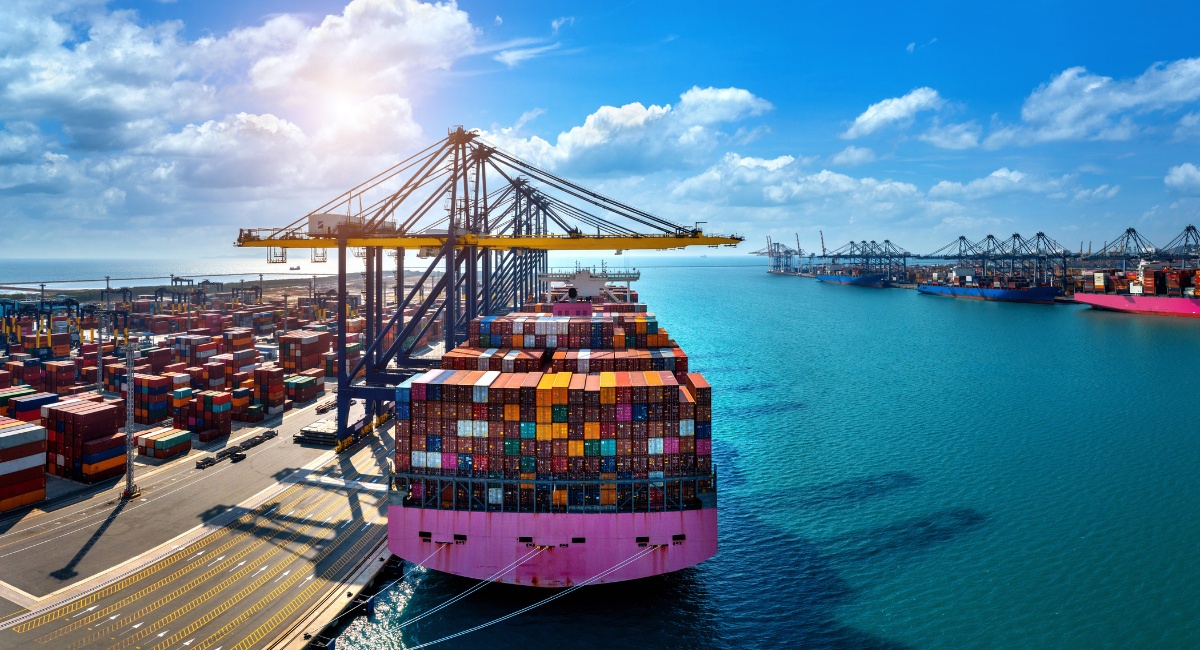
A cargo ship full of containers, docked at an industrial port, is being unloaded by large cranes

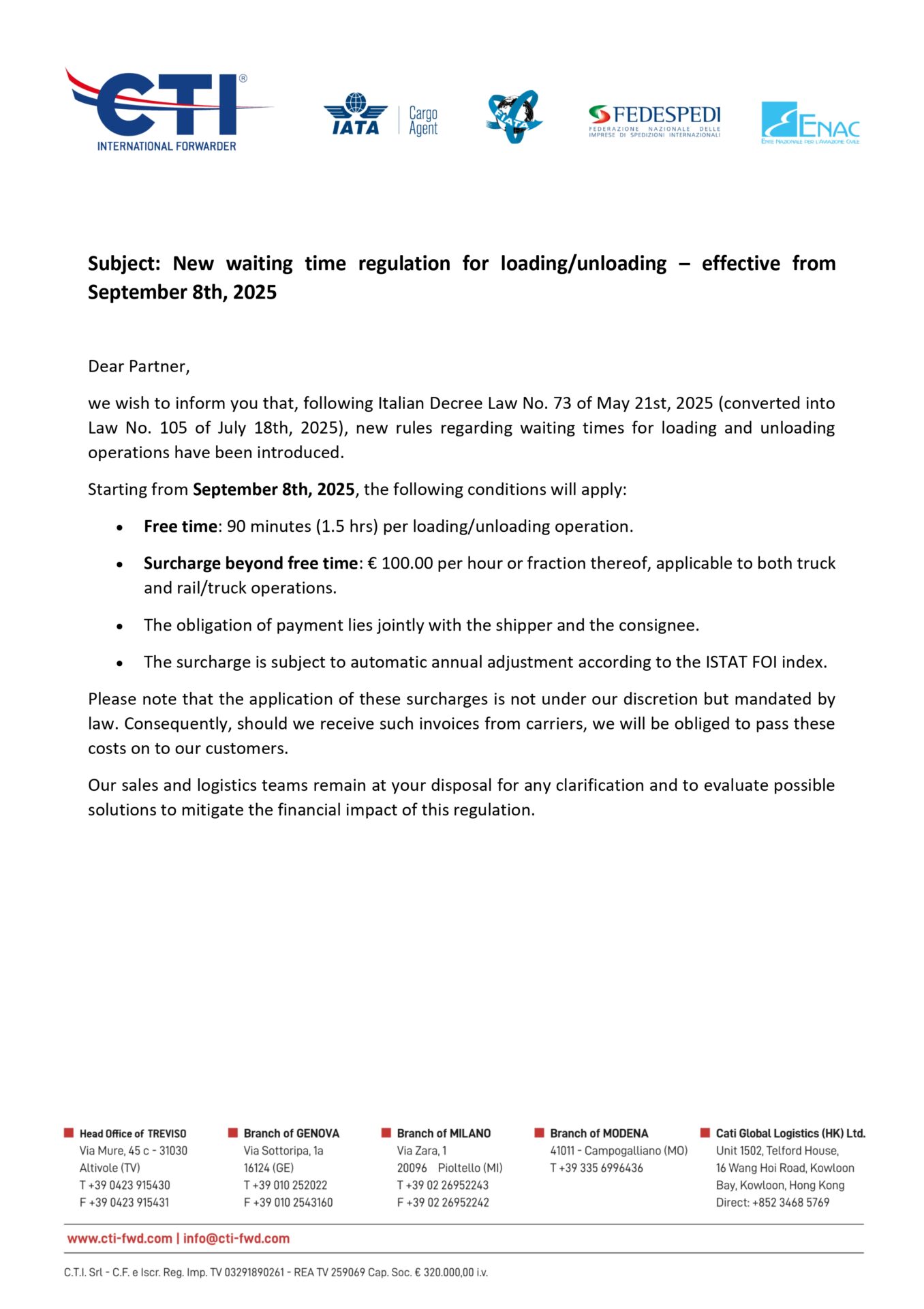
As of 21 May 2025, the so-called “Infrastructure Decree 2025” (Decree-Law 73/2025) is in force, later converted with amendments into Law No. 105 of 18 July 2025. The package addresses road haulage, ports, motorway concessions and governance tools for the sector. For those operating in international logistics, the most impactful change concerns waiting times at loading/unloading and the related compensation, but it is not the only element to consider.

So let’s start with what directly affects our customers.

The new conditions

From 8 September, CTI will apply the new rules specifically on waiting times at loading and unloading. These provide that:
the free-time allowance will be 90 minutes for each operation;
beyond that threshold, compensation of €100 for every hour or fraction of an hour will be due;
payment liability is joint and several between the shipper and the loader.
the compensation will be adjusted annually according to the ISTAT FOI index.

The same rules apply, for the road legs, even when transport is in combined rail/truck mode.

These conditions stem directly from the legislation in force and are not at our discretion. Any excess costs will in fact be passed on to us by the carriers and, in turn, we will be forced to pass them on to our customers.

In this article, in addition to providing a broader overview of the decree’s contents, we will offer some advice on how to mitigate the economic impact of this legislation, while reiterating our availability for clarifications and tailored consulting.

The regulatory framework

Waiting times and compensation

Article 4 of Decree-Law 73/2025 rewrote Article 6-bis of Legislative Decree 286/2005: as anticipated in the previous paragraph, it now provides for a shorter free-time allowance for each operation; compensation of €100/hour (also for fractions) beyond the allowance; joint and several liability between shipper and loader; automatic adjustment of the compensation using the FOI index. The conversion law clarified that waiting times also include periods due to inactivity by the shipper, loader or consignee. In addition, compensation is due even if the time limits specified in the contract are exceeded, where this is evidenced by the documentation. Proof of arrival may be drawn from the company GPS or from the second-generation smart tachograph.

As for the adjustment, the index used is the consumer price index for blue- and white-collar households as defined by ISTAT and published monthly. In other words, the €100 amount is updated year by year in line with the FOI trend.

Payment terms and oversight

The 60-day payment framework for road transport contracts remains in place; in addition, paragraph 15-bis has been added to Article 83-bis of Decree-Law 112/2008: if failure to comply with deadlines also meets the conditions for “abuse of economic dependence”, the AGCM may intervene with formal warnings and sanctions. This makes administrative oversight of payment flows more stringent.

Other measures in the decree useful for international logistics

CIGAL dashboard 

The conversion established, within the Ministry of Labour, CIGAL (Information Dashboard for the management of private procurement contracts in the logistics sector). Objective: to provide interested parties with information for verifying tax, social-security and labour compliance of contractors; enforcement bodies will populate a section dedicated to sanctions; Unioncamere will handle development and technical management. A ministerial decree will define its criteria and technical rules.

Ports and state property

Regarding maritime state-property concession fees, when the ISTAT index of wholesale market values is not available, the rules refer to the producer price index for industrial products; clarifications are also introduced on the Port Master Plan to ensure consistent application.

Exceptional transports

AINOP is integrated as the national reference infrastructure for planning and monitoring corridors for exceptional transports, with interoperability toward GIS, tracking systems and permitting platforms.

Motorway concessions

The law intervenes in the regime, referencing the ART tariff system and setting out procedural measures for updating the PEFs and the concession agreements.

How to prepare with CTI to minimize waits and charges

First and foremost, it is advisable to recalibrate loading/unloading windows and formalize specific SLAs on bay assignment times and site access times, also specifying how they will be measured (gate-in/gate-out timestamps, POD, GPS/tachograph data). For example, for shipments with volumes concentrated in a few hours, it is appropriate to adopt a slot-booking system with priorities and no-show rules.

Similarly, in intermodal flows it is necessary to synchronize rail-terminal slots with the first/last mile by road so as not to exceed the allowance on the road legs.

On the administrative side, it is useful to realign accounting and payment-schedule processes in light of the new paragraph 15-bis and possible AGCM action, to prevent disputes along the supply chain.

CTI remains available for any clarification and to evaluate, together, solutions to cushion the effect of these changes.

US tariffs: impact on international trade (2026 Update)

28.08.2025
Two hands clasping behind the American and European flags, highlighting the agreement signed for the tariffs imposed by the USA on Europe.

The international trade landscape toward the United States has faced a sudden upheaval just as businesses were beginning to stabilize under the regulatory framework introduced last year. While our August 2025 explanatory article detailed an expansion of fiscal pressure based on emergency powers, we are now navigating the aftermath of a landmark judicial ruling that has overturned the legal foundations of those decisions. This update, therefore, aims to provide clarity on the most significant developments that have recently disrupted the status quo.

For those managing logistics and shipments via container and air freight, these shifts represent more than mere regulatory changes; they offer a critical opportunity for financial recovery while simultaneously requiring immediate alignment with a new tariff regime.

The Supreme Court Ruling of February 20, 2026, on the Cancellation of IEEPA Duties

The date marking the beginning of this new phase is February 20, 2026. In a decision that caught many observers by surprise, the U.S. Supreme Court ruled that the duties imposed in April 2025 lacked legal authorization. The core of the dispute centered on the International Emergency Economic Powers Act, commonly abbreviated as IEEPA. The justices held that this statute does not grant the President the authority to impose broad-based tariffs without specific Congressional approval.

This ruling effectively invalidated all measures that had burdened imports over the past several months. Consequently, the government ceased the collection of IEEPA-based duties effective February 24, 2026. Many enterprises that had faced increased costs can now look with relief at a barrier that has officially fallen, although managing past administrative entries still requires a final bureaucratic effort to be fully resolved.

Refund Policies and Procedures

The recovery of duties paid is not an automatic process, and the Importer of Record must take specific proactive steps. The fundamental first step involves accessing the ACE (Automated Commercial Environment) portal to extract a report of all shipments filed between April 2025 and February 2026. It is necessary to isolate the specific tariff lines related to IEEPA duties and verify the status of every individual “Entry,” as the subsequent strategy will depend entirely on this verification.

For shipments that entered the United States in recent months but have not yet reached final liquidation, the most efficient path is filing a Post Summary Correction. This electronic amendment allows for the correction of entry data before the customs process is legally finalized. Conversely, if a shipment is already in “liquidated” status, the law provides a strict window of only 180 days from the date of liquidation to file a formal Protest via CBP Form 19. This document must explicitly cite the Supreme Court ruling and request a recalculation of duties, including the refund of overpayments and applicable interest.

A significant technological update involves the CAPE (Consolidated Administration and Processing of Entries) system, which Customs and Border Protection is making operational in these weeks. This new portal will allow brokers to upload CSV files containing extensive shipment lists to request bulk refunds in a single transaction. Finally, it is important to note that as of February 6, 2026, the U.S. government no longer issues paper checks. To receive funds, every company must complete registration in the ACH (Automated Clearing House) program to facilitate the direct electronic transfer of funds into their bank account.

New 15% US Tariffs for 2026 and the Application of Section 122

While proceeding with recovery efforts for the past, it is necessary to account for a new measure the administration has introduced to balance the effects of the court ruling. To quickly address the regulatory vacuum, the White House has invoked Section 122 of the Trade Act of 1974. This law allows for the imposition of temporary tariffs when there is a need to protect the national balance of payments from excessive imbalances.

Effective February 24, 2026, a new 15% global duty has come into force, applying to most goods imported into American ports. This measure has a maximum validity of 150 days and represents the chosen instrument to maintain fiscal pressure pending new legislative provisions. As this rests on a different legal basis than the IEEPA, this new levy is unaffected by the Supreme Court decision and must be accurately included in landed cost calculations. For logistics firms, this means that cost planning must remain flexible, as the July 2026 expiration could lead to a further change in rates or new Congressional decisions.

Tracking the evolution of US tariffs in a tumultuous 2025

Over the course of 2025, as is widely known, US customs tariffs have profoundly reshaped global trade relations with Canada, Mexico, China, and Europe, putting supply chains and export strategies under serious strain.

In a previous article, we examined the US–China trade war. Here, we focus on the global evolution of tariffs, with a particular emphasis on the European Union, its response measures, the effects on specific sectors and Italian exports, and the latest round of negotiations between European Commission President Ursula von der Leyen and President Donald Trump.

Let’s begin on 1 February 2025. On this date, President Trump signed executive orders imposing 25% tariffs on goods from Canada and Mexico (with Canadian energy taxed at 10%) and 10% on Chinese imports, citing links to the opioid crisis as justification. 

After a brief suspension period, tariffs were reinstated on 4 March: China’s rate rose to 20%, while Canada and Mexico remained at 25%. On 2 April—now referred to as “Liberation Day”—a system of “reciprocal tariffs” came into force, ranging from 10% to 50% and covering approximately 180 countries, with the EU set at 20% and China at 34%. At the same time, tariffs of up to 50% were imposed on steel and aluminium, with all exemptions removed.

This escalation created widespread uncertainty, prompting many businesses to reassess suppliers and logistics routes in search of alternatives.

The European Union’s countermeasures to the US tariffs introduced in february 2025

In response, the European Union promptly prepared retaliatory tariffs worth around €21 billion on US goods, ranging from 10% to 25% and targeting items such as jeans, motorbikes, orange juice, and machinery. However, in an effort to encourage dialogue, Brussels suspended these measures until 14 July, and again until 7 August 2025. 

At the same time, as we’ll explore in more detail below, the EU made a political offer to the US: a “zero-for-zero” agreement on industrial goods such as cars, pharmaceuticals, and machinery, along with a willingness to renegotiate tariffs if the US adopted a similar stance.

These strategic moves helped the EU avoid an uncontrollable escalation and kept negotiation channels open.

US–EU tariff: what is the new 15% “all-inclusive” tariff and which products it covers

As mentioned earlier, on 27 July in Turnberry, Scotland, Trump and von der Leyen reached a political agreement: a 15% “all-inclusive” US import tariff, effective from 1 August 2025, covering the majority of European goods. This new framework replaces the earlier threat of a 30% tariff, although steel and aluminium remain taxed at 50%. Brussels is currently negotiating the possible replacement of these duties with a quota-based system. In addition, a “zero-for-zero” clause was introduced, exempting key strategic products such as aircraft, generic pharmaceuticals, semiconductor chips, certain critical raw materials, and selected chemicals.

Subsequently, the administration issued a formal order delaying the implementation of the agreement to 7 August.

Impact of US–EU tariffs on the wine sector

One of the hardest-hit sectors is wine. Exports to the US are now subject to a 15% tariff, with estimated losses of around €317 million in the first year. This figure could rise to over €460 million if the euro-to-dollar exchange rate moves unfavourably.

The measure deals a significant blow to the competitiveness of Italian wine, which is already under pressure from the wider geopolitical environment.

Meanwhile, tariffs on european cars will remain at 2.5%

The 15% agreement does not alter the overall US tariff on European cars, which remains at 27.5% (2.5% MFN + 25% Section 232), as automobiles are excluded from the “all-inclusive” deal.

In practice, US customs duties on cars remain high, leaving the sector particularly exposed.

Impact of the 15% tariff on italian exports

Beyond wine, the 15% tariff could cost Italian exports up to €22 billion across sectors such as fashion, pharmaceuticals, and agri-food, unless further specific exemptions can be secured.

This situation demands a strategic rethinking of global value chains, pricing models, logistics, and market diversification.

Von der Leyen and the zero-for-zero tariffs on strategic products

Ursula von der Leyen placed reciprocal “zero-for-zero” exemptions at the heart of the transatlantic deal: a political commitment to maintaining zero tariffs on aircraft and components, generic pharmaceuticals, technological chips, and critical raw materials. This approach aims to protect vulnerable strategic industries and ensure technological continuity across both markets, while also creating opportunities for regulatory alignment.

In conclusion, the 2025 US tariffs disrupted long-standing trade relations. Yet the 15% “all-inclusive” agreement, while limited in scope, has brought greater stability compared to earlier threats. The EU’s countermeasures and its preference for diplomatic negotiation helped avoid irreversible escalation. It is essential for Italian companies to fully understand the new tariff regime in order to safeguard exports and supply chains.

CTI remains available to provide hands-on support: with our expertise, we can help businesses reorganise logistics routes, mitigate tariff impacts, and identify applicable exemptions in this new global landscape.

Contact us for tailored advice.

US–China trade war: what’s happening and how it’s affecting global trade

14.08.2025
Tug of war between the American flag and the Chinese flag symbolizing the US-China trade war

The year 2025 marks a turning point in the ongoing trade dispute between the United States and China. Both powers have introduced significant changes to customs tariffs and the treatment of low-value goods, with wide-reaching consequences for global commerce. This article aims to unpack the key aspects of this complex situation – from the current tariffs and updates to the “de minimis” exemption, to trade volumes and a broader look at how this tightly interconnected economy is shifting.

Let’s begin with a look at the most recent developments. Enjoy the read!

US–China tariffs: latest updates on US duties on chinese imports

To begin with some context: the United States imposed a 10% tariff on Chinese imports on 4 February 2025, followed by a sharp increase to 20% on 4 March, citing concerns linked to the opioid crisis. Then, on 11 April, the administration introduced a “reciprocal” rate of 34%, which, by 12 April, effectively reached as high as 145% on certain categories of Chinese goods. In retaliation, China levied tariffs of up to 125% on US products.

To ease tensions, a deal was negotiated on 12 May 2025, reducing US tariffs on Chinese goods to 30% and Chinese tariffs on American goods to 10%, with the arrangement set to remain in effect until 12 August 2025.

More recently, on 29 July 2025, US and Chinese officials held talks in Stockholm, agreeing in principle to pursue an extension of the tariff truce beyond the mid-August deadline. However, the final decision now lies in the hands of President Trump.

How high are China’s tariffs on US goods?

Now let’s turn to China’s retaliatory tariffs against the United States. In response to Washington’s moves, Beijing imposed additional duties that escalated rapidly – rising from 34% in early April to as much as 125% by 12 April 2025. These were later scaled back to 10% under the terms of the May agreement, which remains in effect until 12 August 2025 as part of the tariff truce.

This sequence of events highlights just how fast-moving and mutually punitive these measures have been, with tangible repercussions across sensitive sectors such as agriculture, strategic raw materials, and technology.

What is the “De Minimis” exemption in the US and what’s changed?

One of the most impactful recent shifts in global trade dynamics has been the reduction—and eventual full suspension—of the US “de minimis” exemption. Previously, shipments valued at under $800 could enter the United States without duties or formal customs procedures, thanks to Section 321 of the 1930 Tariff Act. This provision fuelled the rise of platforms like Shein and Temu, which were able to ship low-cost goods directly to American consumers with no added charges.

However, from 2 May 2025, the US administration scrapped the exemption for parcels arriving from China and Hong Kong. Initially, these packages were hit with a 120% tariff or a flat fee of $100; this was later reduced to 54% from 14 May 2025.

Then, on 30 July 2025, a new executive order extended the suspension globally, effective from 29 August 2025. For a six-month period, all international mail parcels will face flat fees between $80 and $200, after which country-specific ad valorem duties will be introduced. The move has already triggered a 35% drop in mail traffic from China and a 4–5% dip in shares of FedEx and UPS.

How much do the United States and China trade with each other?

Now let’s take a look at some compelling figures that help paint a clearer picture of the situation.

In 2024, total trade in goods between the US and China exceeded $580 billion: around $438 billion in US imports from China and $143 billion in US exports to China, resulting in a significant trade deficit of $295 billion. This imbalance has remained largely unchanged through the early months of 2025, despite shifting tariffs.

This deficit highlights the US’s heavy reliance on foreign sectors such as electronics, textiles, and components. Meanwhile, China has continued to focus on exporting raw materials and advanced technology to the US. The tariff tensions have already led many Chinese companies to reroute exports through Southeast Asia, with shipments via Vietnam up 30% and via Indonesia up 25%, in an effort to sidestep direct duties.

Who depends more on whom, China or the US?

When it comes to mutual dependence, it’s clear that the United States imports far more from China ($438 billion) than it exports in return ($143 billion), leaving Washington more vulnerable to disruptions in Chinese supply chains.

On the other hand, China remains exposed to punitive US measures. Rising tariffs have limited Beijing’s access to the American market. In response, the Chinese government has introduced financial support schemes, tax incentives, free trade zones, and export-promotion initiatives to soften the blow on its exporters; nevertheless, these punitive measures still represent a significant problem for the Chinese economy.

In short, the relationship is distinctly asymmetrical: the US benefits from low-cost consumer goods but suffers from a persistent trade deficit. China, while enjoying a surplus, faces growing barriers that restrict its access to US buyers. This dynamic creates mutual pressure—but with differing consequences for each country’s trade strategy.

In conclusion, the measures introduced in 2025—from the tariff escalations to the global suspension of the de minimis regime—are reshaping international trade at a breakneck pace. The US–China trade gap highlights America’s deep reliance on Chinese imports, while Beijing seeks to offset the impact through alternative markets and domestic reforms.

By understanding these changes, globally active companies can plan more effectively. We encourage you to get in touch with CTI for tailored guidance on how to adapt your supply chain to this fast-evolving landscape and minimise both operational and tariff-related risks.

Port congestion: how it happens and how to prevent it

28.07.2025
Cargo ship enters a port subject to frequent port congestion

Port congestion can be likened to a “maritime traffic jam”—a bottleneck in the seaborne trade system. Ships waiting for a berth, containers sitting in storage for extended periods, trucks queuing at entry gates: these slowdowns across the logistics chain result in delays, increased costs, and operational challenges for all stakeholders involved.

This is why understanding the underlying dynamics that cause these disruptions—and implementing concrete, effective solutions—is essential. In this article, we provide an analysis of these phenomena, in the hope that it will prove useful for those aiming to avoid such complications.

What are port operations?

To understand how a maritime bottleneck forms, it’s important to start with the daily sequence of port operations:

  • Berthing and unberthing: The ship arrives, is moored, and container lifting begins.
  • Yard operations: Containers are handled using cranes, reach stackers, forklifts, internal transport systems (such as terminal tractors), and coordinated through the TOS (Terminal Operating System).
  • Cargo transit by road or rail: Containers are loaded onto trucks or trains and removed from the terminal.
  • Customs clearance and inspections.

If any of these stages slows down, the entire flow is affected. For example, slow gate systems or manual bureaucratic procedures can cause truck bottlenecks, triggering a domino effect on yard storage and space availability. The TOS plays a critical role in managing the flow. Modern systems, powered by IoT, 5G, and predictive algorithms, optimize container stacking and resource allocation, reducing queues and wait times. In contrast, outdated or inefficient TOS solutions lead to delays that compromise operational fluidity.

What are port terminals?

In essence, port terminals are the physical and operational hubs where transshipment occurs, i.e., the transfer of cargo between vessels and land or rail transport. The main types include:

  • Container terminals: Exclusively handle containerized cargo.
  • Multipurpose terminals: Manage both general cargo and containers.
  • Bulk/liquid terminals: Dedicated to commodities like grain, oil, minerals, and similar.

The TOS also manages gate scheduling, regulating truck inflows and outflows to reduce congestion. In highly digitalized ports, pre-registration and automatic vehicle recognition systems accelerate transit times. Conversely, outdated or poorly integrated systems significantly reduce efficiency.

How port congestion happens

Congestion arises when port infrastructure and services cannot meet demand. This may result from seasonal trade surges or from structural weaknesses, such as outdated facilities. Key causes include:

  1. Unexpected traffic spikes, such as those seen before Lunar New Year.
  2. Limited capacity, including shortages of berths, yard space, vehicles, or railcars.
  3. Labor shortages, due to strikes or chronic understaffing.
  4. Technological inefficiencies, such as obsolete TOS platforms.
  5. External disruption, like extreme weather or geopolitical tensions, (for example, rerouting to avoid the Red Sea has caused congestion in Singapore and Rotterdam, while the increase in transpacific routes has overwhelmed major hubs.)

The resulting congestion can take three main forms: vessel congestion, where numerous ships are forced to wait at anchorage due to a lack of available berths; yard congestion, where container yards reach full capacity, making it difficult to organize and move cargo efficiently; and gate congestion, characterized by long lines of trucks queuing to access terminal gates. These types of congestion are not isolated phenomena, they tend to reinforce one another. A backlog of ships can lead to yard overflow, which in turn slows down gate operations, creating a chain reaction that becomes a self-perpetuating cycle.

The effects of port congestion

When ports become overcrowded, delays ripple through entire supply chains. In major ports like Los Angeles, Chittagong, or Durban, ships can wait an average of three to four days—sometimes longer. The consequences include increased demurrage charges and disrupted delivery schedules.

The environmental toll is also significant: idling ships and trucks burn fuel unnecessarily, raising emissions.

Industrially, congestion leads to production delays, missed deadlines, and the need for higher safety stock levels—driving up overall logistics costs.

Strategies to prevent and manage congestion

  1. Infrastructure development

    Expanding berths and automating operations (e.g., cranes, AI-driven TOS, digital twins) increases throughput capacity.
  2. Dynamic planning and forecasting

    Predictive analytics and AI improve vessel scheduling and prevent terminal overload.
  3. Route diversification and use of alternative ports

    Rerouting to less congested terminals—such as shifting from Antwerp to Rotterdam—can ease pressure on major hubs.
  4. Labor optimization

    Flexible contracts, cross-terminal staffing, and targeted recruitment reduce labor-related bottlenecks.
  5. Digitization of customs procedures

    Replacing manual processes with EDI and digital systems streamlines clearance.
  6. Real-time visibility

    Platforms like GoComet provide live dashboards tracking arrivals, queue lengths, and terminal occupancy.
  7. Stakeholder coordination

    Collaboration between shipping lines, terminal operators, port authorities, TOS vendors, and traffic managers ensures synchronized operations.

In short, port congestion is not inevitable. It results from a combination of operational and structural challenges, many of which are manageable with foresight and coordination.

Ultimately, only a truly integrated approach—uniting port operators, logistics providers, and authorities, can deliver sustainable solutions.

If you’re interested in learning how CTI can help implement tailored anti-congestion solutions for your supply chain, don’t hesitate to contact us for a dedicated consultation.

Insurance of goods in international transport

30.05.2025
depiction of a globe with meridians and parallels, with a small truck and a large document for the insurance of goods in international transport

International freight transport is a crucial sector for the global economy; however, it presents numerous risks. Losses, damages, and delays can cause significant costs for both the shippers and the recipients of the goods. For this reason, there are various insurance solutions, including carrier liability insurance and the coverage provided by the CMR Convention for road transport.

In particular, in this article, we will explore the characteristics of these policies, their costs, and the differences between the various forms of protection.

So, if you want to ship with peace of mind, keep reading: the answers you are looking for are here!

Carrier liability insurance: the main things to know

When a company entrusts the shipment of its goods to a carrier, the latter assumes a very specific responsibility: ensuring that the cargo arrives at its destination in perfect condition. However, road transport is subject to multiple risks, such as accidents, theft, or damage due to unforeseen events. Consequently, the law requires the carrier to take out a specific insurance policy, known as carrier liability insurance.

This policy represents a security guarantee for the transported goods and adequate protection for both the carrier and its customers. In other words, its main function is to cover any damages that may occur during transport. But what are its main features? Let’s examine them in detail.

What is carrier liability cnsurance?

Carrier liability insurance is a mandatory civil liability policy for carriers transporting goods on behalf of third parties. Specifically, its purpose is to protect the carrier from potential compensation claims in case the goods suffer damage, loss, or other issues during transit.

What does carrier liability insurance cover?

Carrier liability insurance generally covers:

  • Damage or loss of transported goods
  • Theft during transit
  • Accidents or extraordinary events (for example, fires, rollovers, etc.)
  • Delivery delays, although these must be caused by events covered by the policy

However, there may be limitations or exclusions depending on the insurance company and contractual conditions.

What are the carrier’s obligations in transport?

The carrier is responsible for ensuring that the goods entrusted to them are transported safely and delivered to the recipient within the agreed timeframe. Additionally, they must strictly follow the instructions provided by the sender, ensuring that all procedures are respected. For example, one of the fundamental obligations includes the proper management of transport documentation, such as the waybill, which certifies the shipment details.

How much does carrier liability insurance cost?

The cost of carrier liability insurance can vary based on several factors. For example, these include the type of goods transported, their value, the distance traveled, and the level of coverage chosen. In general, the insurance premium can range from a few hundred to several thousand euros per year, depending on the specific needs of the transport company.

How much does carrier liability insurance reimburse?

The maximum amount reimbursable under carrier liability insurance is regulated by current legislation. In domestic transport, the compensation is usually around 1 euro per kilogram of gross weight of the lost or damaged goods. Similarly, for international transport, the limits set by the CMR Convention apply.

What is the difference between carrier liability insurance and “per account” insurance?

The difference between carrier liability insurance and “per account” insurance lies in their purpose. Instead of covering the full value of the goods, carrier liability insurance, which is mandatory for transporters, only covers the carrier’s civil liability concerning the transported goods.

On the other hand, “per account” insurance is taken out directly by the owner of the goods and provides broader protection, covering the total value of the cargo without the limitations imposed by carrier liability insurance.

The CMR convention for international road transport

In international road freight transport, besides carrier liability insurance, it is equally important to consider the CMR Convention. This is an international treaty that regulates the transportation of goods between different countries and establishes the carrier’s responsibilities in case of damage or loss of goods. In other words, this convention aims to standardize regulations at an international level, providing a clear legal framework for both carriers and cargo owners.

In particular, the CMR Convention defines various aspects of transport, including the required documentation and the procedures for handling disputes. Understanding its rules is essential for those working in the industry, as it provides important legal guarantees and protections in case of issues during shipment.

What are the rules of the CMR convention?

The CMR Convention establishes that a CMR waybill must be issued for every international road transport. This essential document certifies the transport conditions of the goods. Additionally, it regulates the carrier’s liability limits and specifies the circumstances under which the carrier can be held responsible for any damage to the goods.

For instance, in cases of loss or damage to the goods during transport, the carrier may be required to compensate for the damage, but only within the limits set by the convention. For this reason, it is crucial to understand the specific conditions established by this treaty.

How is a CMR waybill issued?

The CMR waybill is a transport document issued in three copies, which must be signed by the sender, the carrier, and the recipient. It must also contain detailed information about the transport, including:

  • Sender’s and recipient’s details
  • Description of the goods
  • Weight and volume of the cargo
  • Date and place of departure and arrival

Therefore, its correct completion is essential to ensure shipment traceability and protect all parties involved.

Who issues it?

The preparation of the CMR document is primarily the responsibility of the sender, although it is often completed with the assistance of the freight forwarder and the carrier. In fact, it is a crucial document, as it certifies the agreement between the parties involved in the shipment and serves as a guarantee for both the sender and the recipient.

When is it not required?

The CMR waybill is not required for domestic transport or when transport takes place entirely within a single country without crossing borders. In such cases, national transport documents are used, which still provide shipment traceability.

However, it is always important to check current regulations, as some countries may require specific documents even for domestic transport.

What is CMR insurance?

CMR insurance is a specific policy for international road transport, covering the carrier’s liability for the transported goods. With this policy, it is possible to obtain compensation in case of loss or damage to the goods, within the limits set by the CMR Convention.

Therefore, it is an essential protection for those operating in the road transport sector and seeking to reduce the risks associated with this activity.

What does it cover?

CMR insurance covers:

  • Damage or loss of goods during international transport
  • Carrier’s liability within the limits of the CMR Convention
  • Legal costs for disputes related to transport

However, certain exclusions may apply, such as force majeure events or shipper negligence. For this reason, it is essential to carefully review the policy terms before purchasing it.

Finally, understanding regulations and insurance policies in international transport is essential to protect goods and ensure efficient risk management in logistics.

The CARGO insurance policy: a must-have for total peace of mind

In the context of international transport, companies face multiple risks that can compromise the safety of their goods. For this reason, in addition to the coverage provided by carrier liability insurance and the CMR Convention, there is an insurance solution that offers even broader protection: Cargo insurance.

Specifically, this type of insurance is designed to ensure full compensation in the event of damage, theft, or other unforeseen events that may compromise the goods during transit. Thanks to its flexibility, it is considered one of the most reliable and versatile types of coverage. Consequently, Cargo insurance has now become a must-have for all businesses looking to engage in international trade with greater peace of mind.

Why should a company consider “Cargo” insurance for its shipments?

Goods in transit are exposed to numerous risks, such as physical damage, theft, or loss, which can result in significant financial losses. Although logistics service providers implement measures to ensure shipment security, unpredictable factors can still compromise the integrity of the goods.

Furthermore, the lack of transparency in the risk assessment models used by providers makes it difficult for companies to estimate the effectiveness of existing protective measures. As a result, Cargo insurance serves as an effective solution, providing financial coverage for any adverse events that may occur during transport.

What are the features of “Cargo” insurance for freight transport?

Cargo insurance is a policy that covers losses and damages to transported goods, regardless of the mode of transport used—whether by land, sea, or air.

Additionally, this coverage extends to a wide range of risks, including accidents, natural disasters, and other unforeseen events that could compromise the integrity of the goods. To be more specific, the policy can be customized based on the company’s specific needs, taking into account the nature of the transported goods, the routes taken, and other relevant factors.

In conclusion, relying on experienced consultants, such as CTI, helps businesses identify the most suitable coverage and manage international transport risks more effectively.

So don’t hesitate to contact us for a personalized consultation!

Guide to the World’s Strictest and Most Stringent Customs

27.05.2025
customs employee from one of the countries with the strictest customs in the world carrying out a check on a container

When it comes to international trade, customs is one of the most critical aspects to manage. Each country has its own regulations, and in some cases, these can be extremely strict, making the import and export process complex and full of obstacles.

If shipping goods abroad were always simple, no company would face delays, endless documentation, or unexpected taxes. But reality is quite different.

In this guide, we will analyze the strictest customs in the world, providing advice on how to best manage customs clearance procedures and identifying countries with the most efficient regulations.

Which Are the Strictest Customs in the World?

Customs regulations vary significantly from country to country: while some nations have streamlined and transparent procedures, others impose rigorous controls, detailed documentation, and high customs costs.

Below, we highlight the main difficulties companies may encounter when shipping goods to each of these countries.

Brazil

Brazil is known for having one of the most complex customs systems in the world. The customs clearance procedures are characterized by high bureaucracy, detailed inspections, and particularly high import taxes.

To overcome these obstacles, it is necessary to have a local customs broker assist with operations. The required documentation is very specific and includes detailed commercial invoices, certificates of origin, and product identification codes. Additionally, every shipment must be pre-declared to avoid delays and issues with customs authorities.

India

Similar to Brazil, India also imposes strict rules, particularly regarding the necessary import documentation. In addition to the commercial invoice, a certificate of origin is required, and in many cases, the KYC (Know Your Customer) form. Furthermore, both the sender and the recipient must provide passport copies and a Power of Attorney for the customs broker to complete the procedure.

Another critical aspect is the variability of regulations depending on the port of entry, which can lead to unpredictable delays. To facilitate the process, it is advisable to plan ahead and carefully verify all required documents.

United Kingdom

After Brexit, the United Kingdom introduced new customs regulations, making the import and export process more complex than before. In addition to standard documents, obtaining an EORI (Economic Operators Registration and Identification) number is mandatory for customs clearance.

South Africa

South Africa’s customs procedures are characterized by long processing times and a complex bureaucratic system. While the required documentation is similar to that of other countries, the approval process can be unpredictable.

To avoid delays and additional costs, it is advisable to work with a local customs broker who understands the South African customs system and can facilitate clearance.

Guatemala

Shipping goods to Guatemala can be complicated due to stringent customs regulations. Extensive documentation is required, including detailed invoices and certificates of origin, as well as strict pre-declaration procedures.

Companies operating with Guatemala must ensure that all documentation is well-organized and collaborate with a local broker to avoid issues with customs authorities.

Philippines

The Philippines is known for having a particularly complex customs system, with high tariffs and strict regulations. The entire clearance process can be lengthy, costly, and full of bureaucratic hurdles.

To simplify the process, it is crucial to prepare all required documents in advance, including detailed commercial invoices and certificates of origin.

Turkey

In Turkey, the customs clearance process can be unpredictable and often influenced by sudden regulatory changes. Customs authorities may impose specific restrictions on certain products and require additional documentation.

Indonesia

Another country that imposes strict import restrictions and requires thorough documentation checks is Indonesia. The customs clearance process can be lengthy, especially if the shipment is not accompanied by all necessary documents.

To avoid complications, it is essential to collaborate with an experienced customs broker who can ensure compliance with local regulations and facilitate the passage of goods.

Mexico

Mexico presents unique customs challenges, especially for those importing textiles or large quantities of products. The country imposes strict restrictions on imported goods’ volumes and applies high duties on merchandise from China.

To avoid issues, many companies choose to ship non-textile products, such as technology, which are not subject to the same restrictions. Additionally, for B2C shipments, Mexico imposes a maximum limit of nine items per shipment, complicating operations for companies selling directly to consumers.

How to Handle Customs Clearance in the Most Complex Customs?

Navigating the strictest customs regulations can be challenging, but with the right preparation, it is possible to reduce the risk of delays and complications. Now that we have seen which customs are the most severe, let’s look at how to handle them most effectively.

First of all, it is essential to know in detail the regulations of the destination country. Customs laws change frequently, so it is useful to monitor updates and adjust accordingly.

Additionally, one of the main causes of delays is incomplete or incorrect documentation. Small errors in documents can lead to customs holds and additional costs. Therefore, every commercial invoice, certificate of origin, and declaration must be completed with maximum accuracy.

Finally, collaborating with local customs brokers and international logistics experts can make a difference. These professionals know the procedures in detail and can facilitate the entire process, avoiding unforeseen problems.

Which Countries Have the Best Customs and Customs Procedures?

While some customs are known for their rigidity, some countries stand out for their streamlined and efficient procedures, facilitating international trade.

Among the best are Hong Kong and Singapore, which boast clear, digitized procedures free of excessive bureaucracy, making them two of the world’s leading trade hubs.

The United Arab Emirates has also established itself as a model of efficiency thanks to significant investments in logistics infrastructure and digitized customs systems that simplify foreign trade.

In Europe, Finland, Netherlands, Luxembourg and Ireland stand out, where bureaucratic procedures are minimized and customs clearance times are among the fastest in the world. For example, in Finland, the entire export process takes less than 36 hours, while in Ireland, it is reduced to just 24 hours.

New Zealand and Georgia also excel in customs efficiency due to simplified regulations and advanced infrastructure that facilitate international trade.

Finally, Qatar has invested in digitizing processes, creating a fast and transparent system that makes it an important logistics hub in the Gulf region.

Having an efficient customs system is a strategic advantage for any country, as it promotes global trade and reduces costs for businesses. However, not all nations offer the same level of ease in customs clearance, which is where the most unexpected risks for companies arise.

The Main Unexpected Customs Risks

Beyond the rigidity of regulations, there are unforeseen risks that can negatively impact a company’s customs operations. Let’s see the most common ones and how to avoid them.

One of the main risks concerns dual-use products, which may be subject to restrictions if intended for military use. Declaration errors can lead to penalties or goods being seized. Another common issue is intellectual property violations, with counterfeit goods being confiscated, which cannot be detected by simple X-ray scans.

Incorrect tariff classification is another significant risk: a wrong customs code can result in lost tax benefits or higher-than-expected duties.

Moreover, problems can arise due to poor internal communication: if a company changes suppliers or transportation methods and fails to update customs declarations, it may face retroactive penalties. Additionally, sanitary and phytosanitary regulations can block the import of food products if the country of origin does not meet the required standards.

Finally, with the increase in post-clearance audits, companies may face customs inspections years after importation, risking fines and additional duties.

In conclusion, customs procedures can either be a resource or an obstacle to international trade, depending on the country and a company’s preparation. Understanding regulations, proper document management, and an effective compliance strategy are essential elements to minimize risks and ensure smooth operations.

In short, relying on industry experts is not just advisable but strategically essential. CTI offers specialized consulting to support companies in managing logistics and customs regulations.

If you want to ensure seamless shipments and minimize risks, contact our team for a personalized consultation!

Multimodal transport: increased efficiency, cost reduction, and flexibility in shipments

20.05.2025
depiction of the concept of multimodal transport: a container ship, a lorry and a cargo plane amidst a multitude of people walking

Multimodal transport represents an advanced solution in the logistics sector, combining different modes of transport to optimize efficiency, reduce costs, and increase flexibility in shipments. This integrated approach allows companies to face the challenges of the global supply chain with greater agility and precision.

What does multimodal transport mean?

Multimodal transport refers to the coordinated use of two or more different modes of transport, such as road, rail, sea, or air, within a single transport contract. In other words, goods are moved from the point of origin to the final destination through different modes, but under the management of a single logistics operator, known as the Multimodal Transport Operator (MTO). This approach simplifies logistics management, as the customer interacts with a single point of contact responsible for the entire process, from planning to delivery.

A distinctive aspect of multimodal transport is the issuance of a single transport document, often referred to as the Multimodal Bill of Lading, which covers the entire shipment route. This unified document facilitates administrative and customs procedures, reducing the bureaucratic complexity associated with managing separate documents for each transport mode used.

How does multimodal transport work?

The operation of multimodal transport involves detailed planning and efficient coordination among the different transport modes involved. The process begins with an assessment of the characteristics of the goods, customer requirements, and route specifics. Subsequently, the Multimodal Transport Operator develops an optimized logistics plan that combines the most appropriate transport modes to ensure reduced transit times and competitive costs.

For example, a shipment might begin with road transport from the sender’s location to a railway terminal, continue by rail to a seaport, be loaded onto a ship for overseas transport, and finally be delivered to the final recipient via another road transport segment. Throughout this process, the MTO monitors and manages each phase, ensuring a smooth transition between different modes and resolving any logistical issues that arise.

Multimodal and intermodal transport: key differences

Although the terms “multimodal” and “intermodal” are often used interchangeably, there are key differences between the two concepts. In intermodal transport, goods remain within the same loading unit, such as a standardized container, for the entire duration of the journey, without ever being unloaded or reloaded. This method reduces the risk of damage and increases efficiency in transfer operations.

Conversely, multimodal transport allows goods to be transferred between different loading units or transport means. This provides greater flexibility in selecting shipping modes but may require additional handling operations that could affect delivery times and overall costs.

Who fills out the multimodal document required for multimodal transport?

The multimodal document is an essential element for ensuring the proper management of multimodal shipments. Its completion is the responsibility of the Multimodal Transport Operator, who oversees the entire logistics process.

Who signs the multimodal document?

The multimodal document is signed by the Multimodal Transport Operator and, in some cases, by the carriers involved in the different transport phases. This ensures that each phase of the shipment is covered by a single transport contract, simplifying administrative management and reducing the risks associated with the responsibility for goods during transit.

Dangerous goods: completing the multimodal dangerous goods declaration

When transporting dangerous goods, documentation must comply with specific regulations to ensure the safety of the entire logistics chain. The Multimodal Dangerous Goods Declaration (DGD) is essential for declaring the nature of the hazardous goods transported and the related precautions to be taken.

What does DGD (Declaration for Dangerous Goods) mean?

The DGD (Declaration for Dangerous Goods) is a mandatory document that certifies the shipment’s compliance with international regulations on the transport of hazardous goods. This document must be accurately completed, including details on the type of goods, hazard classes, safety measures, and packaging material information.

Advantages of multimodal transport

The adoption of multimodal transport offers numerous advantages to companies operating in international trade:

  • Greater operational efficiency: The combination of different transport modes allows for optimized delivery times and reduced delays.
  • Cost reduction: By selecting the most economical transport options and centrally managing logistics, it is possible to lower overall shipping costs.
  • Increased flexibility: Multimodal transport allows adaptation to specific shipping needs, using the most suitable modes for each segment.
  • Environmental sustainability: The combined use of more eco-friendly transport means, such as rail or maritime transport, helps reduce the environmental impact of logistics operations.

In conclusion, multimodal transport represents a strategic solution for companies looking to optimize their supply chain, improve operational efficiency, reduce costs, and minimize environmental impact. Adopting this approach enables businesses to address modern logistics challenges with greater flexibility and competitiveness.

If you want to discover how multimodal transport can improve your logistics operations and contribute to your company’s success, contact us today. Our team of experts is ready to provide you with personalized consulting to develop tailored solutions that meet your specific needs.

Risks and unexpected costs in international shipping: examples and useful tips

13.05.2025
depiction of a truck next to some coins and a globe with a downward arrow, indicating unexpected costs in international shipments

Today, we discuss a topic that involves almost all spheres of the macro world of logistics. In fact, it is probably one of the subjects that, more than many others, is perceived as crucial by all the players involved. International shipping represents a critical element for companies operating on a large scale. However, behind every shipment that crosses borders and oceans lies a series of unexpected costs and logistical risks that can significantly impact profit margins. Customs delays, documentation errors, unforeseen storage expenses, and sudden tariff increases are just some of the pitfalls that can affect an international transportation operation. How can these issues be proactively addressed? In this article, we will explore the main risks and unexpected costs in international shipping and, in addition, provide useful tips for optimizing logistics.

Main risks in international shipping

One of the most common obstacles in global shipping concerns incomplete or incorrect documentation. Each country has specific regulations, and the absence of a necessary form or an incorrect customs code can result in significant delays and financial penalties. In other words, a simple oversight in goods classification can inflate import costs or even block the shipment at customs for days or weeks.

Another critical factor is inadequate packaging. Goods must be protected not only from shocks and vibrations during transport but also from atmospheric agents. Insufficient packaging can lead to damaged goods and, consequently, returns, claims, and additional costs for product replacement.

Unexpected delays are another frequent problem in international shipping. The causes can be multiple: adverse weather conditions, port strikes, maritime traffic congestion, or technical issues with carriers. Even meticulous planning may not be enough to prevent such unforeseen events, but risk management strategies can help mitigate their impact.

Finally, companies often face hidden costs and unexpected surcharges. These can include unexpected customs duties, surcharges for shipping to remote areas, extended storage fees, and additional charges due to sudden fuel price fluctuations. Without careful planning, these costs can heavily impact a company’s profitability.

Hidden costs: where can unexpected expenses hide?

One of the most common unexpected costs in international shipping is demurrage and detention charges. When a container is not picked up or returned within the stipulated time, the terminal owner may apply daily fees for its prolonged use. This frequently occurs due to documentation delays or customs clearance issues.

Another hidden cost relates to customs inspections and examinations. Authorities may randomly select shipments for thorough checks, which can range from simple document reviews to more complex physical inspections. These operations not only extend transit times but can also generate additional costs for handling goods and extra days of storage at terminals.

Some logistics operators and freight forwarders also face sudden tariff increases. Shipping companies, for instance, regularly apply the General Rate Increase (GRI), a mechanism that allows them to raise transport rates based on market conditions. These increases can be particularly burdensome for businesses that do not carefully plan their shipping budgets.

What does logistics cost optimization mean?

Logistics cost optimization does not simply mean cutting expenses but rather finding the right balance between efficiency and savings. Indiscriminately reducing costs can lead to service issues, delays, and damaged goods. On the contrary, well-planned optimization allows companies to gain a competitive advantage by improving operational management and eliminating unnecessary expenses.

One of the most effective tools for optimizing logistics costs is the smart use of technology. Advanced shipment management software and data analytics can help companies forecast costs, track shipments in real time, and optimize transport routes. Additionally, integrating automation systems in warehouses reduces handling times and minimizes human errors.

How to optimize transportation costs in international shipping?

A first step to reducing transportation costs is carefully selecting logistics service providers. The lowest price is not always the best choice: relying on reliable and transparent operators can significantly reduce risks and unexpected costs.

Another effective strategy is shipment consolidation. Instead of shipping partial loads multiple times a month, grouping multiple orders into a single shipment allows companies to reduce transportation costs and additional expenses.

Finally, proper supply chain planning can make a difference. Accurately forecasting demand and avoiding urgent shipments reduces the need for expedited shipping, which often entails much higher costs compared to standard transportation.

What are the main logistics KPIs?

For efficient logistics management, it is essential to constantly monitor certain Key Performance Indicators (KPIs). These metrics enable companies to assess the effectiveness of their operations, identify inefficiencies, and improve the supply chain.

  • Average transit time: Measures the average duration of a shipment from the point of origin to the final destination. Reducing this value improves delivery reliability and reduces management costs.
  • On-time delivery rate: Indicates the percentage of shipments delivered within the expected timeframe. A high on-time delivery rate is crucial for ensuring customer satisfaction and enhancing company reputation.
  • Cost per unit shipped: Calculates the average cost incurred to ship a unit of product. Regular analysis of this KPI helps identify opportunities for optimization and cost reduction in logistics.
  • Damage and return rate: Measures the percentage of damaged or returned products relative to total shipments. A high value may indicate issues in packaging, transportation, or goods handling.
  • Inventory turnover: Represents the number of times a company renews its inventory within a given period. A high turnover suggests efficient stock management, while a low turnover may indicate excess inventory or sales difficulties.

In addition to these main KPIs, many companies also monitor indicators such as supply chain lead time, cargo capacity utilization rate, and customer satisfaction level. The adoption of digital tools and management software allows for the collection of precise data, improved logistics planning, and more effective strategic decision-making.

Turning risks into opportunities

In conclusion, it can be said that international shipping is full of challenges, but it is equally true that with the right strategy, these challenges can be transformed into a competitive advantage. A strategic approach to logistics not only minimizes unforeseen events but also ensures more reliable delivery times, greater customer satisfaction, and better cost control. Moreover, constantly monitoring KPIs and implementing innovative solutions allows businesses to tackle global trade challenges with greater confidence and competitiveness.

But that’s not all: partnering with an experienced provider like CTI means reducing risks, optimizing costs, and improving supply chain efficiency. With a team of specialists and customized solutions, CTI helps companies manage logistical complexities with confidence and precision.

Do not let logistical uncertainties slow down your business. Rely on CTI for safer, more efficient, and optimized international logistics. Contact us today to discover how we can support your company in achieving its goals..

JIT transport: Just in Time in business logistics

06.05.2025
international logistics worker consulting a notepad smiling about the advantages of Just In Time transport

Have you ever heard of Just in Time (JIT) and how it can revolutionize a company’s logistics management? This innovative approach has become a benchmark for many industries seeking to enhance efficiency and reduce waste. It has transformed how businesses organize production and distribution, eliminating unnecessary stockpiling and optimizing operations. In today’s highly competitive economic landscape, companies must continuously find ways to cut costs and improve responsiveness to market demands. JIT is one of the most effective strategies for streamlining processes, reducing inventory levels, and maximizing operational efficiency. Originally developed to optimize the supply chain by reducing waste and storage costs, JIT is now widely adopted across various industries to improve efficiency. In this article, we will explore what JIT is, why it is important, and its advantages and challenges. Additionally, we will compare it to on-demand logistics and examine how businesses can successfully implement it.

What is Just in Time logistics?

Just in Time (JIT) logistics is a system based on a simple yet highly effective principle: receiving raw materials, components, or finished products exactly when needed, without accumulating excess stock. Developed in Japan in the 1970s by Toyota, this approach has revolutionized production and logistics, making them leaner and more efficient.

The fundamental goal is to eliminate unnecessary stockpiling, minimizing waste and reducing the capital tied up in inventory. In other words, companies can shift their focus from managing large inventories to aligning production and distribution with actual market demand. For JIT to be effective, the entire supply chain must be perfectly synchronized, with suppliers ensuring timely and precise deliveries.

Why is Just in Time logistics important?

Implementing a JIT system can significantly improve a company’s operations, especially in fast-moving and competitive industries. One of its key benefits is the reduction of storage costs: without large stockpiles, companies save on storage space and inventory management expenses, leading to substantial financial savings.

Additionally, JIT enhances operational efficiency by streamlining processes, preventing delays, and optimizing production and distribution timelines. Companies adopting JIT also experience better quality control—materials and components arrive precisely when needed, allowing defects or issues to be identified and resolved immediately, reducing waste.

Another crucial advantage is flexibility. Companies can adapt quickly to market fluctuations, producing only what is required and avoiding overproduction or shortages.

However, despite its many benefits, JIT requires strong supplier collaboration. Any delays or supply chain disruptions can have an immediate impact on production. To mitigate risks, many companies diversify their suppliers or establish contingency plans to handle potential disruptions.

Key concepts of Just in Time

Several fundamental principles underpin JIT’s success:

  • Pull production: Instead of producing large volumes in anticipation of demand, production is initiated based on actual orders received.
  • Waste reduction: The goal is to eliminate inefficiencies, avoiding overproduction, excessive inventory, and downtime.
  • Supply chain synchronization: Every element of the logistics chain, from suppliers to transportation to distribution, must be perfectly coordinated to maintain a smooth and uninterrupted flow.
  • Continuous improvement (Kaizen): JIT is a dynamic system that relies on ongoing process optimization to enhance efficiency.

To illustrate, think of JIT as a precisely synchronized clock—each gear represents a component of the supply chain, and the entire system functions efficiently only when all parts work in harmony.

Similarities and differences with on-demand logistics

Just in Time is often compared to on-demand logistics, as both aim to optimize supply chain efficiency and minimize stock levels. However, their differences are more significant than they may initially appear.

JIT relies on meticulous planning, ensuring that each step in the supply chain is carefully synchronized so that materials and products arrive precisely when needed. This approach minimizes inventory and enhances operational efficiency but requires strong coordination and a reliable network of suppliers.

On-demand logistics, by contrast, is far more flexible and responsive. It is designed to accommodate sudden demand fluctuations without relying on rigid planning. Technologies such as predictive analytics and artificial intelligence play a crucial role in adjusting supply to real-time demand.

While JIT achieves efficiency through careful planning and coordination, on-demand logistics prioritizes adaptability and responsiveness. Choosing between the two depends on a company’s specific needs: JIT is ideal for structured and consistent production cycles, whereas on-demand logistics suits industries with unpredictable demand patterns.

Just in Time as a competitive advantage

Successfully implementing JIT can provide a significant competitive advantage, especially in today’s fast-paced global market. Reducing inventory minimizes fixed costs, improves product quality, and enhances a company’s ability to respond swiftly to market needs. However, ensuring a smooth JIT operation requires a well-structured and reliable supply chain to prevent disruptions that could compromise production.

Partnering with experienced logistics providers and trustworthy supply chain collaborators is essential for maintaining a seamless JIT system. Effective shipment management, continuous monitoring of transport flows, and the ability to swiftly address potential challenges are critical to the strategy’s success.

If you are looking to implement a reliable and efficient JIT model for your business, having industry professionals who understand complex logistics operations is vital. 

Contact us for personalized guidance and discover how we can help you streamline your shipments and optimize your supply chain.

Import and export opportunities in emerging markets: focus on Africa and Southeast Asia

29.04.2025
political map of the African continent showing the main trade hubs and an aircraft charting a route to import and export opportunities in this emerging market

Africa and Southeast Asia represent highly attractive emerging markets for Italian businesses. These regions offer numerous opportunities for both export and import, thanks to their economic growth and diversification of productive sectors. Additionally, with infrastructure investments and economic cooperation initiatives with Europe, these markets are becoming increasingly appealing to Italian companies.

What does Italy export to Africa?

Italy has established significant trade relations with several African countries. In 2024, trade between Italy and Africa reached 60 billion euros, with Italian exports amounting to 21 billion euros. Notably, the main exported products include industrial machinery, electrical equipment, chemical products, and vehicles. This demonstrates that these goods meet the infrastructure and industrial development needs of many African countries. Moreover, there is a growing demand for Italian products in the fashion and design furniture sectors, thanks to the reputation of Made in Italy. Morocco, Tunisia, and South Africa are the most promising markets. Let’s take a closer look.

What to export to Morocco? 

Morocco is a growing market for Italian exports. The most promising sectors include machinery and equipment for the manufacturing and agricultural industries, chemical products such as fertilizers and textile industry items, as well as processed and high-quality food products. Additionally, Morocco serves as a key logistics platform for exports to Sub-Saharan Africa, making it a strategic partner for Italian businesses.

How does customs work in Morocco?

Furthermore, Morocco has implemented customs procedures to facilitate international trade. Since 2003, the country has pursued a policy of modernization and trade facilitation, introducing measures such as the Automated Customs Networked System, operational since January 2009, which has increased the digitalization rate of customs procedures to over 90%. However, it is essential for Italian companies to be familiar with specific customs regulations and bilateral agreements in place to optimize import-export operations.

What to export to Tunisia?

Similarly, Tunisia offers various opportunities for Italian exports, particularly in machinery and equipment for the textile and agri-food industries, chemical and pharmaceutical products, as well as automotive components, given the growth of the local industry. In fact, the Tunisian government has promoted policies to attract foreign investments, making the country a competitive hub for manufacturing production.

What is required to export to Tunisia? 

To export to Tunisia, Italian companies must obtain the necessary authorizations depending on the type of product, understand local regulations, especially those related to quality and safety standards, and prepare the required documentation, including commercial invoices, certificates of origin, and transport documents. Additionally, relying on local consultants can help streamline bureaucratic procedures.

What does Tunisia export?

Tunisia primarily exports textiles and clothing, agricultural products such as olive oil and dates, and electronic components, particularly for the automotive industry. Furthermore, the country’s increasing specialization in the mechanical and aerospace sectors presents new collaboration opportunities for Italian businesses.

What does South Africa import?

Not only North Africa but also South Africa, with its diversified economy, primarily imports machinery and equipment for the mining and manufacturing industries, chemical products including pharmaceuticals, and vehicles with automotive components to support its local industry. Italy also exports luxury goods such as food and wine products and clothing, which are gaining popularity among the growing South African middle class.

What does South Africa export?

South Africa mainly exports minerals and precious metals such as gold, platinum, and diamonds, agricultural products including fruit and wine, and vehicles with automotive components due to a strong domestic industry. Italy also imports timber and chemical products for industrial production.

Now, let’s look at some examples from Southeast Asia: what does Thailand export?

Similarly, Thailand is a major player in international trade, with diversified exports that include electronic products such as integrated circuits and components, automobiles and related parts, agricultural products like rice, sugar, and natural rubber, as well as seafood such as shrimp and canned tuna. Moreover, the country has developed a competitive manufacturing sector that attracts foreign investments.

How much does Thai customs cost?

Customs tariffs in Thailand vary depending on the type of imported goods. Consumer and luxury goods may be subject to high duties, while equipment and machinery for production can benefit from reduced or zero duties, especially if not produced locally. Additionally, with the implementation of the Regional Comprehensive Economic Partnership (RCEP), many tariffs have been gradually eliminated, facilitating trade within the ASEAN region.

What does Vietnam export?

Vietnam has seen significant export growth in recent years. The main exported products include textiles and clothing, footwear, electronic products such as mobile phones and components, as well as agricultural products like coffee, rice, and seafood. This highlights how the country is establishing itself as a production hub for the technology sector, attracting investments from various multinational companies.

In conclusion, Africa and Southeast Asia offer extensive opportunities for Italian companies looking to expand their international presence. Economic diversification, infrastructure investments, and trade liberalization policies are making these markets increasingly accessible. However, understanding local regulations, customs procedures, and market dynamics is crucial to maximizing success in import-export operations. Therefore, investing in a well-structured strategy and building relationships with local partners can make the difference in achieving commercial success in these growing markets.

If you want to seize these opportunities and grow your business internationally, our team of experts is ready to assist you. Contact us today for a personalized consultation and discover how to successfully expand your business in emerging markets!

Sustainable logistics: the future of shipping and green supply chain management

22.04.2025
Person working at a PC with floating green symbols representing sustainable logistics.

Sustainable logistics is redefining supply chain management by reducing environmental impact and promoting ethical, efficient practices. More and more companies are embracing innovative strategies to cut CO₂ emissions, streamline transportation, and enhance energy efficiency in logistics operations.

Key pillars of sustainable logistics

Understanding sustainability in logistics requires a closer look at its fundamental components:

Eco-friendly transportation

Using low-emission vehicles, such as electric and hydrogen-powered trucks, along with route optimization, significantly reduces the carbon footprint. Additionally, digitalization in logistics enhances consumption monitoring and boosts environmental performance. Alternative fuels like biogas and biodiesel further support the green transition. The deployment of autonomous vehicle fleets and drone delivery systems represents a cutting-edge approach to more efficient and eco-conscious transportation.

Likewise, many companies are implementing urban car-sharing models to decrease the number of vehicles on the road, effectively lowering overall emissions. In short, every innovation in this sector contributes to reducing environmental impact.

Sustainable packaging

Adopting recyclable materials and eco-friendly packaging is crucial for minimizing waste and enhancing supply chain sustainability. Many businesses are now investing in biodegradable or reusable packaging solutions to limit environmental harm. Additionally, reducing plastic usage and integrating reuse systems positively impact waste management. Advancements in packaging technology also help optimize transport space and reduce the number of trips required.

While many companies have already made progress, there is still significant room for improvement. Investing in research and development to create high-performance sustainable materials could revolutionize the industry.

Green warehouses

Logistics facilities are transitioning toward sustainability through solar power, LED lighting, and automation technologies that minimize energy waste. Advanced warehouse management systems optimize storage space and reduce costs, while robotics and autonomous vehicles further improve efficiency and energy consumption. Smart climate control systems and sensor technology also contribute to lower energy use and better preservation of sensitive goods.

Cutting-edge technologies

Integrating artificial intelligence, machine learning, and predictive analytics enhances operational efficiency and minimizes environmental impact. Blockchain-based traceability solutions ensure transparency and sustainability across the supply chain. The Internet of Things (IoT) enables real-time shipment tracking, optimizing logistics processes. Additionally, 3D printing in specific supply chain phases can reduce transport dependency, significantly lowering the environmental footprint.

While these technologies provide substantial benefits, they require upfront investment. However, companies that invest in innovation today position themselves for long-term competitive advantages.

Benefits of green logistics

Embracing green logistics practices provides a wide range of advantages:

  • Lower operational costs: Optimized routes and improved energy efficiency lead to significant savings in transportation and warehouse management.
  • Regulatory compliance: Companies prioritizing sustainability are better prepared to meet increasingly strict environmental regulations.
  • Enhanced brand reputation: Eco-friendly practices strengthen corporate image and encourage customer loyalty.
  • Improved efficiency: Advanced technologies and optimized management strategies streamline supply chain operations.
  • Increased appeal to investors and partners: Businesses committed to sustainability attract more opportunities in response to growing demand for green solutions.
  • Reduced environmental impact: Cutting greenhouse gas emissions and pollution in logistics contributes to a healthier planet and better quality of life.

The future of sustainable logistics

With stricter regulations and heightened environmental awareness, sustainable logistics is set to become a fundamental industry pillar. The shift toward circular economy models and stronger collaboration between businesses and institutions will be essential in creating a more sustainable and competitive supply chain.

One of the biggest challenges ahead will be expanding reverse logistics strategies, which focus on recovering and recycling end-of-life products. These initiatives will further reduce waste and pave the way for new business models centered on sustainability. Additionally, reducing CO₂ emissions will remain a key priority, driving investments in emerging technologies like hyperloop transportation and low-impact synthetic fuels.

In summary, sustainable logistics is not just an obligation—it’s an opportunity for businesses to stand out in an evolving market. If you’re ready to explore customized solutions for your company, contact us today for more information!

Customs reform 2025: all the updates and changes for companies

15.04.2025
person interacting with a virtual logistics map and a mobile phone to optimise shipments with the new customs reform 2025

The Customs Reform of 2025 introduces significant changes for companies operating in international trade, aiming to simplify operations, improve compliance, and promote sustainability. With Legislative Decree No. 141 of September 26, 2024, the Italian customs regulations have undergone substantial updates, offering significant advantages for businesses and industry operators.

In this article, we delve into the key points of the reform, analyzing its practical implications and how to adapt to the changes.

Key points of the customs reform 2025

Regulatory simplification and sanctions system

One of the most notable changes concerns the simplification of customs regulations. The previous 400 provisions have been reduced to just 122 articles, a significant reduction that makes the legislative framework leaner and more comprehensible. This initiative aims to eliminate regulatory redundancies and provide companies with a clear and accessible reference, reducing time and costs related to administrative management.

Additionally, a major highlight is the update to customs sanctions, which now distinguish more clearly between administrative and criminal offenses. For instance, the crime of smuggling has been divided into two main categories: false declarations, which occur when provided information is incomplete or inaccurate, and failure to declare, when goods are not declared at all. Penalties have also been redefined to be more proportionate to the severity of the violation, ensuring greater fairness in sanctioning processes.

This change aims to facilitate compliance for companies, reducing the risk of interpretative errors and potential penalties.

Digitalization of customs procedures

Digitalization is a cornerstone of the customs reform, designed to revolutionize the management of trade flows. As of January 21, 2025, the NCTS Phase 5 system has come into effect, eliminating the use of paper forms in favor of digital customs declarations. This ensures not only greater operational efficiency but also more precise control over transaction data. The update aims to expedite customs transit operations, reduce errors, and enhance security, enabling a more transparent and automated management of trade flows.

Additionally, new digital procedures were implemented for exports starting in December 2024, improving export efficiency and cutting bureaucratic delays.

New combined nomenclature TARIC 2025

Effective January 1, 2025, the new TARIC has updated the Combined Nomenclature by adding specific categories for products such as fish and seafood, tomatoes, mineral oils, and wooden panels. This update reflects the evolution of international markets and provides a more detailed classification system to improve the application of customs duties and trade measures.

As a result, companies must pay close attention to these updates to ensure the correct classification of goods and the proper application of customs tariffs.

Preferential origin rules of the PEM convention

Another key aspect of the reform concerns the new preferential origin rules introduced by the Pan-Euro-Mediterranean (PEM) Convention, which became effective on January 1, 2025. These rules mark a significant step forward in making trade between the 23 contracting countries more flexible and inclusive, enhancing the competitiveness of European and Mediterranean companies in global markets. Specifically, they offer greater flexibility to economic operators by increasing the tolerance thresholds to 15% and expanding the duty-drawback, allowing for broader recovery of customs duties.

These changes promote trade with the 23 contracting countries of the PEM Convention, creating new opportunities for Italian businesses.

VAT among border duties

As of October 4, 2024, import VAT has been formally included among customs duties, except in cases where goods are released for consumption in another EU Member State. This adjustment simplifies fiscal operations and aims to ensure greater uniformity and transparency in international trade relations.

How to adapt to the new regulations

To prepare for the changes introduced by the 2025 Customs Reform, companies must focus on several key actions. IT systems need to be updated to ensure compatibility with the new NCTS Phase 5 system, enabling the digitization and optimization of customs declarations. At the same time, staff training is essential to ensure a full understanding of the new operational procedures and the proper handling of goods according to TARIC classification.

For this reason, collaborating with reliable partners like CTI can help manage regulatory complexities and align internal procedures with the new compliance rules.

Why the reform matters for the logistics sector

The 2025 Customs Reform is not just a regulatory update; it is a genuine opportunity to enhance the competitiveness of the Italian logistics sector. Thanks to simplification and digitalization, companies will be able to reduce operating costs, improve delivery times, and increase transparency and traceability of operations. The NCTS Phase 5 system, for example, enables continuous monitoring of goods, improving security and reducing errors during transit. Additionally, the TARIC update provides a clear and detailed reference for goods classification, helping to avoid disputes or delays caused by regulatory discrepancies. This increased logistical efficiency translates into a competitive advantage for Italian companies in the global market.

In conclusion, the 2025 Customs Reform represents a turning point for international trade, offering innovative tools to address the challenges of globalization. For companies, promptly adapting to these changes is essential to remain competitive and seize new opportunities offered by the global market.

Contact us today for tailored support and solutions to meet your logistical and customs needs.

News on the ADR 2025 regulation for the transport of dangerous goods.

08.04.2025
orange barrels for the transport of dangerous goods, labelled according to ADR 2025.

2025 marks an important turning point for the transport of dangerous goods thanks to the update of the ADR regulation. This discipline, which regulates the road transport of hazardous substances, has been revised to ensure greater safety, uniformity, and sustainability. Among the main updates, 11 new UN numbers have been introduced, enriching the list of substances subject to regulation and adapting to technological and scientific advances in the sector.

In particular, one of the most significant updates is the inclusion of sodium-ion batteries as a new category of dangerous goods. The new dedicated UN numbers include:

  •  UN 3551: Sodium-ion batteries.
  •  UN 3552: Sodium-ion batteries contained in equipment or packed with equipment.
  •  UN 3558: Vehicles powered by sodium-ion batteries.

This change highlights the commitment to adapting the regulation to technological innovations while ensuring safety. According to UNECE, other significant changes include the elimination of special provision 653 and the introduction of specific rules for asbestos-containing waste, which now require safer packaging for transport.

What is the ADR regulation, and when does it apply?

The ADR regulation, short for “Agreement concerning the international carriage of Dangerous goods by Road,” is a set of rules established to ensure that the transport of such goods occurs under maximum safety conditions. First signed in 1957 and subject to biennial revisions, it applies to all signatory countries, covering both international and national transport.

In short, this regulation applies whenever substances classified as hazardous to health, the environment, or safety are transported. The obligations concern both carriers and companies that produce, ship, or receive these goods. Although the regulation primarily focuses on road transport, it is coordinated with other regulations concerning maritime and air transport.

What are the products under ADR?

The ADR regulation classifies dangerous goods based on their nature and the type of risk they pose. These categories include explosives, compressed gases, flammable liquids, solids prone to spontaneous combustion, and many others. For instance, flammable liquids include gasoline, alcohol, and solvents, while regulated gases include LPG and oxygen. The 2025 update has added 11 new UN numbers, further expanding the regulation’s coverage to adapt to new substances identified as hazardous.

Another significant update concerns lithium batteries, for which a charge level not exceeding 30% during transport has been recommended. While not mandatory in 2025, this measure could become binding from 2026. Additionally, the new rules introduced for sodium-ion batteries demonstrate the intention to include emerging technologies in the regulation.

When is ADR not required? How many kg can be transported without ADR?

The regulation provides some exemptions depending on the type of substance transported, the quantity, and the type of packaging. For example, small quantity transports can be exempted from full ADR obligations, provided that each package complies with specific limits defined in the regulation. In other words, for limited quantities or certain categories of goods, it is not necessary to apply all the prescribed safety measures.

In terms of quantity, up to 333 kg or liters of certain materials can be transported without applying all the rules. This demonstrates that the regulation is designed to balance safety and operational practicality.

What is needed to transport ADR?

The transport of dangerous goods requires a series of documents, permits, and specific skills. Among the main requirements are the ADR license for drivers, transport documentation with UN numbers and class codes, and a vehicle approval certificate. Moreover, vehicles must be equipped with mandatory tools such as fire extinguishers, orange panels, and emergency kits.

Similarly, companies that regularly handle dangerous goods must employ an ADR consultant, a mandatory figure to ensure compliance with regulations and safety in operations. This highlights the importance of a professional and organized approach to managing such transports.

What does ADR packaging mean?

ADR packaging is designed to safely contain dangerous goods during transport. It must comply with strict international standards and pass tests for resistance to shocks, leaks, and pressures. For example, the materials used, such as plastic or metal, must be certified according to UN standards and ensure airtight closure to prevent leaks.

Additionally, each package must bear clear labeling with the UN number, hazard class, and risk symbols. This system ensures complete traceability and allows all operators to quickly identify the characteristics of the goods.

In conclusion, the ADR 2025 regulation represents a significant step forward for the safe transport of dangerous goods. With new rules and updates, such as those concerning sodium-ion batteries and provisions for asbestos-containing waste, the logistics sector can face current challenges with more effective tools and procedures.

If you need further details or support for your ADR shipments, do not hesitate to contact us. Partnering with CTI means relying on an experienced freight forwarder who skillfully navigates the numerous regulations governing this sector. We are ready to provide you with comprehensive assistance for your logistics needs!

What does LCL shipping by land and sea mean?

01.04.2025
Cargo ship at sea carrying many containers thanks to LCL and FCL shipments.

LCL shipping (Less than Container Load) is a logistical solution designed for businesses or individuals who need to transport goods without requiring the full capacity of a container. This method allows shippers to share container space with other cargo, optimizing costs and making it accessible even for smaller volumes.

By consolidating multiple shipments into a single container bound for one or more shared destinations, LCL shipping offers significant advantages for both sea freight and land transport. For sea freight, containers are shared among different shippers, while in land transport, commonly referred to as groupage, loads are combined to maximize efficiency.

In this article, we’ll dive into the specifics of LCL shipping, compare it to FCL shipping (Full Container Load), and explore land transport options like LTL shipping (Less than Truck Load) and FTL shipping (Full Truck Load). Understanding these shipping methods will help you determine the best option for your needs. Let’s start by focusing on LCL shipping and how it differs from FCL shipping.

When and why to choose LCL shipping

LCL shipping is ideal in several scenarios:

  • Small volumes: If the goods you need to ship don’t justify booking a full container, LCL offers an economical and efficient solution.
  • Cost savings: By sharing container space with other shipments, you only pay for the space your cargo occupies, reducing overall costs.
  • Flexibility: LCL shipping provides more flexible scheduling, allowing you to ship goods even if you don’t have a full load.

However, it’s worth noting that LCL shipping may involve longer transit times due to the consolidation and deconsolidation process. Additionally, sharing a container with other shipments could increase the risk of damage, making high-quality packaging essential.

What’s the difference between LCL and FCL shipping?

The primary distinction between LCL and FCL lies in how the container is used:

  • LCL shipping (less than container load): Your goods are combined with shipments from other customers in a single container. This approach is cost-effective for smaller volumes but may result in longer transit times and a higher risk of damage due to shared space.
  • FCL shipping (full container load): The container is dedicated entirely to a single shipment. This ensures faster delivery times, greater security, and is ideal for large or high-value loads.

Choosing between LCL shipping and FCL shipping depends largely on your shipment volume and your needs for security and timing. For example, companies shipping perishable or sensitive goods often prefer FCL for greater control and faster delivery. Conversely, industries such as fashion accessories or industrial supplies often find LCL shipping to be a more strategic and cost-effective choice.

Another key consideration is customs clearance. FCL shipments typically involve simpler procedures since the entire container belongs to a single customer. In contrast, LCL shipments require managing documentation for multiple shipments within the shared container.

How much does LCL shipping cost?

Cost is a major factor when selecting the right logistics solution. The price of LCL shipping depends on factors such as weight, volume, destination and distance. Freight rates are calculated based on either actual weight or volumetric weight, whichever is greater. Long-distance routes or remote destinations typically incur higher costs, as do special services like custom packaging or hazardous materials handling.

Many logistics providers offer tailored packages, including discounts for regular shipments or combined services like transportation and warehousing. Such options can provide significant advantages for businesses looking to optimize their supply chain.

FTL and LTL shipping by Land: efficient road transport solutions

When it comes to land transport, the two main options are FTL shipping (Full Truck Load) and LTL shipping (Less than Truck Load). These methods determine the level of truck space used for a shipment.

What is LTL shipping?

LTL shipping refers to transporting goods that don’t fill an entire truck. Similar to LCL shipping for sea freight, LTL shipping is perfect for small shipments and offers significant cost savings by sharing truck space with other shippers.

LTL shipping is especially effective for regional or national deliveries, where flexibility is key to ensuring reliable and timely shipments. With advancements in technology like GPS tracking and digital platforms, businesses can now monitor their shipments in real-time, enhancing transparency and customer satisfaction.

What is FTL shipping?

On the other hand, FTL shipping involves dedicating an entire truck to a single shipment. This method is ideal for large volumes, sensitive goods, or urgent deliveries, as it ensures faster transit times and reduces the risk of damage.

FTL shipping is often preferred by industries like food and pharmaceuticals, where maintaining product integrity and meeting tight deadlines are critical. Additionally, FTL shipping allows for greater control over transport conditions, such as temperature regulation or specialized handling requirements.

Groupage transport vs. LCL and LTL shipping

Groupage transport is a general term for combining smaller loads to maximize vehicle efficiency. LCL shipping and LTL shipping are specific methods within groupage transport, tailored to sea and land freight respectively. This distinction is crucial for selecting the right service based on factors like cost, speed, and security.

Working with an experienced logistics partner can make all the difference when managing LCL shipments, FCL shipments, FTL transport, or LTL transport. Expert providers ensure seamless support, tailored solutions, and efficient handling of all your shipping needs. Contact us today for a personalized quote or to learn more about our transport services.

Export Russia: everything you need to know to export to russia today

25.03.2025
Container for export to Russia bearing Russian flag and lifted by crane

Exporting to Russia represents a strategic opportunity for many businesses. However, navigating the process of exporting to Russia today can be challenging due to specific regulations, trade restrictions, and evolving economic conditions. In this guide, we’ll cover the key aspects of exporting to Russia, including the procedures, required documents, and the most in-demand product categories.

How to ship goods to Russia? 

Successfully exporting goods to Russia requires meticulous planning and a thorough understanding of customs regulations. To get started, it’s essential to partner with a reliable logistics provider experienced in the Russian market. Key considerations include:

  • Customs procedures: Russia imposes specific duties and requires compliance certificates for many products. For instance, the Customs Union Declaration of Conformity (TS) is mandatory for items like mineral fertilizers and household chemicals. These certifications confirm that your products meet local market standards.
  • Transportation methods: Goods can be shipped by road, sea, or air, each with its own advantages and challenges. Road freight is ideal for full loads, offering flexibility, while air freight is suitable for urgent or high-value shipments. Sea freight, on the other hand, is a cost-effective choice for large volumes but requires longer transit times.
  • Packaging and documentation: Durable packaging is essential to protect your goods during transit. Equally important is the preparation of accurate documentation, including detailed commercial invoices, packing lists, and the specific certificates required by Russian customs. Incomplete or incorrect paperwork can lead to significant delays.

Working with experienced freight forwarders simplifies logistical and bureaucratic complexities, reducing the risk of costly mistakes.

Which goods are restricted for export to Russia?

Export restrictions to Russia have increased, especially in response to international sanctions. Prohibited or regulated items include:

  • Advanced technology products: High-tech items like quantum computers, advanced semiconductors, electronic components, and software are banned to curb technological advancements in strategic Russian industries.
  • Dual-use goods: Items with both civilian and military applications, such as drones, drone software, and encryption devices, are heavily regulated to prevent misuse in military contexts.
  • Luxury agro-food products: High-value food items like caviar, truffles, and premium alcoholic beverages are subject to restrictions, especially if they exceed specific economic thresholds.
  • Luxury goods: The EU has imposed bans on exporting luxury items to Russia, including high-end cars, watches, and jewelry, targeting the country’s economic and political elites.
  • Industrial equipment and energy technologies: Export restrictions also apply to equipment and technologies used in defense, security, and energy industries, aiming to weaken critical sectors of the Russian economy.

To ensure compliance with these regulations and avoid legal complications or customs delays, it is essential to rely on knowledgeable shipping partners who stay up-to-date with international trade rules.

What can you export to Russia? 

Despite challenges, Russia remains a vast and diverse market for several industries. While geopolitical conditions have impacted exports, certain product categories continue to see strong demand:

Exporting food products

Italian food products, such as pasta, preserves, and cheeses, remain highly sought after in Russia. To access this market, exporters must comply with stringent certification standards, including specific conformity tests for many food items.

Exporting wine 

Italian wine continues to enjoy strong demand due to its exceptional quality. Successful wine exports to Russia require complete and accurate documentation, including certificates of origin and chemical analyses. Premium wines, however, are subject to stricter regulatory scrutiny.

Exporting olive oil to Russia

Italian olive oil is highly popular in Russia. Exporters must ensure that labels are translated into Russian and that all products comply with updated customs regulations. Certifications of organic quality may also be required for specific product lines.

Exporting furniture

Italian furniture and design remain highly valued in Russia. Given current import-export restrictions, companies should explore local distribution channels or establish strategic partnerships to overcome potential logistical and legal barriers.

Shipping goods to Russia from Italy 

What is the current relationship between Italy and Russia?

While geopolitical tensions have impacted trade between Italy and Russia, their commercial relationship remains significant for certain industries. Historically, Italy has been one of Russia’s main European trading partners, although sanctions have restricted some activities.

What does Italy export to Russia?

Key exports from Italy to Russia include:

Agro-food products and beverages: Select Italian food products continue to have a presence in the Russian market, provided they meet current regulations.

Machinery and industrial equipment: This sector remains subject to strict controls to ensure compliance with international sanctions.

Fashion and accessories: While luxury goods face significant restrictions, certain items remain in demand.

Furniture and design products: Exports in this sector are also regulated to ensure alignment with trade sanctions.

What documents are required to export to Russia?

Essential paperwork for exporting goods to Russia

To export goods to Russia, you’ll need to prepare the following documents:

  • Commercial invoice: This must be detailed and compliant with international standards.
  • Packing list: Includes an accurate description of the goods being shipped.
  • Compliance certifications: Mandatory for many products, particularly those in the technology and industrial sectors.
  • Customs documentation: Required to declare goods and calculate duties.
  • Sanitary and phytosanitary certificates: Essential for food products.

In conclusion, exporting to Russia offers numerous opportunities but also presents challenges due to its complex regulations and dynamic trade landscape. Collaborating with industry experts and reliable partners ensures a smoother process, enabling businesses to navigate bureaucracy efficiently and stay compliant with evolving regulations.

For tailored support and expert advice on your international shipments, don’t hesitate to contact us.

Import VAT: everything you need to know

18.03.2025
male hands using a calculator and filling in a form to calculate VAT on imports.

Import VAT is a critical topic for anyone involved in international trade. In this article, we’ll delve into how it works, the necessary compliance steps, and strategies to avoid common mistakes and efficiently manage your imports.

Starting from the basics: what is import VAT?

Import VAT is a tax applied to goods entering the customs territory of Italy from non-EU countries. It is calculated based on the value of the imported goods, transportation costs, and any applicable customs duties. The purpose of this tax is to ensure fair fiscal treatment between domestically produced goods and imports, preventing market distortions that could disadvantage local businesses.

Understanding the rules surrounding import VAT is essential to avoid penalties and maintain competitiveness. Moreover, proper management of this tax directly impacts your company’s cash flow.

Customs payment of VAT on imports

Import VAT is paid at the time of customs clearance, when goods are officially registered for entry into the national territory. The importer must submit a customs declaration and pay the calculated VAT. Alternatively, the reverse charge mechanism allows for deferred VAT payment during the periodic VAT return, improving cash flow and reducing immediate financial impact.

The reverse charge mechanism: a strategic advantage

The reverse charge mechanism is particularly beneficial for businesses handling large import volumes. This system allows companies to record VAT as both a payable and a receivable simultaneously, avoiding an immediate cash outflow. As a result, many businesses find it advantageous to integrate this system into their processes. However, eligibility for the reverse charge mechanism requires meeting specific criteria and maintaining detailed documentation.

Necessary steps for managing import VAT

To properly manage import VAT, follow these steps:

  1. Register as a VAT-registered entity with the Revenue Agency.
  2. Identify the TARIC code to determine applicable rates and regulations.
  3. Complete the customs declaration using the Single Administrative Document (SAD).
  4. Pay the VAT due at the time of customs clearance or via the reverse charge mechanism.
  5. Retain all tax documentation for future audits.

Organization and precision are essential in every step to avoid issues.

How to determine the VAT taxable base for imports?

Another essential point to clarify, in order to illustrate the topic in sufficient detail, is the determination of the taxable base. In the calculation of import VAT, the taxable base includes the value of the goods declared at customs, the CIF costs—that is, transportation costs from the moment the goods leave the supplier’s warehouse until they reach the customs point in Italy, including any paid insurance—and, finally, any customs duties, which are calculated on the CIF costs added to the value of the goods.

For example, when importing machinery valued at €10,000, with CIF costs of €500 and customs duties of 5%, the taxable base will be:

(€10,000 + €500) + 5% = €11,025.

This total becomes the basis for calculating import VAT. A common mistake is failing to include all additional costs, such as insurance, in the calculation. Importers must pay close attention to every detail to avoid discrepancies.

It’s also essential to accurately classify the goods from a commodity perspective, ensuring the correct application of tariffs, taxes, and determining if licenses or import restrictions apply.

Accurately determining the taxable base is essential to avoid disputes with customs authorities. Errors can lead to penalties and delays in the clearance process, disrupting the entire supply chain. For this reason, many companies invest in customs consultants to minimize risks and hidden costs.

How to reduce the impact of import VAT

Here are some strategies to optimize import VAT management:

  1. Use VAT warehousing: Postpone VAT payment until the goods are sold, improving cash flow.
  2. Leverage reverse charge: Record VAT directly in your periodic VAT return to streamline financial management.
  3. Plan with customs experts: Identify opportunities to minimize costs and risks while ensuring compliance.
  4. Take advantage of tax exemptions: Utilize special regimes or reduced VAT rates where applicable.
  5. Implement technology solutions: Use tax management software to automate calculations and simplify procedures.

Common mistakes to avoid

Avoid these common errors to prevent penalties and delays:

  • Incorrect data in customs declarations: Always provide accurate and complete information.
  • Miscalculating the taxable base: Ensure all relevant costs, such as transportation and insurance, are included.
  • Missing deadlines: Plan ahead to meet all tax and customs deadlines.

Digital tools and management software can significantly simplify import VAT processes. From automated form completion to verifying calculations, adopting advanced technology reduces the risk of errors and enhances overall efficiency. In today’s globalized market, these tools have become indispensable.

Managing VAT on imports requires regulatory knowledge and careful planning. Understanding how to calculate the taxable base, choosing the best payment strategies, and complying with tax obligations will allow you to optimize costs and improve the efficiency of your international trade operations.

For more information or a personalized consultation, feel free to contact us!

Special Economic Zones (SEZs): A Strategic Opportunity for Global Trade

11.03.2025
World map with global technology or social connection network with nodes and links vector illustration

Special Economic Zones (SEZs) are one of the most effective tools for promoting economic and commercial development in various regions around the world. Thanks to a combination of tax incentives, bureaucratic simplifications and business incentives, these zones offer unique opportunities for companies looking to grow and expand their presence in international markets. But what exactly are SEZs, and how can businesses benefit from them?

In this article, we will take a detailed look at how SEZs work, exploring their advantages, the opportunities they offer to companies, and successful global examples. Additionally, we will discuss the challenges associated with this economic model and future prospects, providing businesses with a clear guide on how to best leverage these zones.

Ready? Let’s get started!

What Does Special Economic Zone Mean?

Special Economic Zones are geographically defined areas where favorable tax and administrative regulations are applied to encourage productive and commercial activities. The main goal is to stimulate investment, improve exports, and promote industrial development.

In practice, an SEZ is an area that offers particularly advantageous conditions to businesses, such as reduced tax burdens, simplified bureaucratic regulations, and easier access to foreign markets. Often located near strategic ports and intermodal hubs, these zones are designed to facilitate international trade and encourage local industrialization.

Globally, SEZs have proven to be an effective tool for attracting foreign capital and enhancing a country’s competitiveness. Thanks to their ability to lower entry barriers for investors, they serve as a key driver of economic growth, especially in less developed regions.

What Are the SEZs in Italy for 2024-2025?

As of January 1, 2024, Italy has introduced the Single SEZ for the South, merging the previously existing SEZs into a single structure. This reform covers eight regions: Abruzzo, Basilicata, Calabria, Campania, Molise, Puglia, Sicily, and Sardinia.

The decision to unify the existing SEZs stems from the need to simplify and make access to incentives and support tools more efficient for businesses. In the past, the fragmented management of SEZs made it difficult for companies to navigate different regulations and complex procedures. With the new Single SEZ, the entire system has been centralized to attract larger investments and ensure greater consistency in the application of incentives.

The sectors involved range from logistics to manufacturing, agribusiness, and raw material processing. This means that, as in other emerging economies, both large corporations and SMEs can find interesting opportunities within SEZs, especially those focused on exports.

What Are the Benefits of SEZs?

Special Economic Zones offer several significant advantages to businesses that choose to invest within them. One of the main benefits involves tax incentives, allowing companies to obtain tax credits of up to 100% on investments made. This incentive is designed to stimulate the growth of productive and industrial activities, providing a concrete advantage to those who establish themselves in an SEZ.

In addition to tax benefits, SEZs also guarantee bureaucratic simplifications, a crucial aspect for businesses that often face long and complex administrative procedures. In other words, the ability to access streamlined procedures and reduced authorization times enables companies to start and manage their operations more efficiently.

Another key advantage is the exemption from customs duties for goods intended for processing and subsequent export. This benefit allows businesses to significantly reduce operational costs and increase their competitiveness in international markets. Furthermore, SEZs often enjoy a strategic location, with advanced logistics infrastructures such as ports, airports, and rail hubs that facilitate the transport and distribution of goods.

However, certain criteria must be met to access these benefits. Specifically, only investment projects with a total cost of at least 200,000 euros are eligible for incentives. This requirement ensures that resources are allocated to economically and industrially relevant initiatives. Additionally, the maximum eligible investment is capped at 100 million euros per project, a limit designed to maintain control over the distribution of incentives and ensure a fair use of available resources.

SEZs are not just an opportunity for large corporations but also for small and medium-sized enterprises looking to expand and compete globally. Thanks to the combination of tax incentives, bureaucratic simplifications, and strategic infrastructure, these zones offer an appealing option for those aiming to reduce production costs and increase operational efficiency.

Who Can Benefit from SEZs?

SEZs are accessible to all businesses, regardless of their size. However, to benefit from the incentives, companies must meet certain fundamental requirements. First, businesses must maintain operations within the zone for at least five years and present a detailed investment plan. This ensures that the incentives are used for solid and long-term projects.

Additionally, companies in liquidation or dissolution are not eligible for the benefits. Some industries, such as the steel industry, energy production, and financial sector, are excluded from the incentives in compliance with European state aid regulations.

Examples of Successful Special Economic Zones Worldwide

SEZs have been successfully implemented in many parts of the world, proving their effectiveness in fostering economic growth.

Shenzhen, China

In the 1980s, Shenzhen was a small fishing village. The establishment of the SEZ transformed this location into one of the most industrialized cities in the world, attracting billions of dollars in investments and becoming a major hub for technology and manufacturing.

Jebel Ali Free Zone, Dubai

The Jebel Ali Free Zone (JAFZA) is one of the most important SEZs in the Middle East. Located near the Port of Dubai, it is a strategic hub for global trade and hosts over 9,500 companies from around the world.

Special Economic Zones in Poland

Poland has established several SEZs that have attracted billions of euros in investments, generating over 280,000 new jobs. This model has significantly contributed to the country’s industrial development and its integration into global markets.

Challenges of Special Economic Zones

Despite the numerous benefits, SEZs present some challenges that must be carefully considered. One of the main issues is bureaucratic complexity, which in some cases can slow down access to incentives and create administrative difficulties for businesses.

Another factor to consider is the environmental impact. Industrial expansion in SEZs can negatively affect the local ecosystem, especially if adequate sustainability measures are not implemented. Additionally, there is a risk of market distortions, with businesses outside SEZs potentially facing competitive disadvantages compared to those operating within these privileged areas.

Despite these challenges, Special Economic Zones represent an extraordinary opportunity for businesses and regional economic development. The introduction of the Single SEZ for Southern Italy confirms the importance of these tools in promoting investments and enhancing the country’s global competitiveness.

Looking ahead, ensuring the effective and transparent management of SEZs will be crucial for them to continue providing tangible benefits for businesses and local economies.

In conclusion, for companies operating in international logistics, such as CTI, SEZs offer a unique opportunity to optimize operations and access new markets. If your company is considering an investment in SEZs, CTI is ready to assist you with tailored logistics solutions to support your success.

Contact us for a personalized consultation!

DAP Incoterms: Delivered at Place

22.07.2024

Let’s delve into one of Incoterms 2020, the rules for domestic and international commercial transactions in terms of ownership, payment and delivery: today we are talking about DAP, or “Delivered at Place,” which is often associated with DDP, “Delivered Duty Paid.” What do they mean and how do they differ? What are the advantages? 

DAP: what does Delivered at Place mean? 

The DAP incoterm is a “Delivery at Place” clause, meaning that the seller makes the goods available to the consignee at an agreed location, but without taking care of the unloading of the vehicle: therefore, he retains responsibility for the goods shipped up to that point.  

It is therefore the seller who is obliged to take care of customs clearance for export and bear all the risks associated with delivering the goods to the agreed point, such as:  

  • Theft. 
  • Loss. 
  • Damage. 
  • Destruction. 

Should any of these events occur, or in the case of any other default, the seller remains liable to the buyer. 

When a shipment crosses several countries, with DAP surrender it is the seller who will also take care of the formalities that may be necessary in any of the transit countries. 

The buyer, on the other hand, must take care of: 

  • Import customs clearance. 
  • Post-delivery transit. 
  • Possible post-delivery transportation through third countries. 

DAP Incoterms: who pays for transportation? 

As we also mentioned in this article, the DAP Incoterms 2020 clause, as well as DPU and DDP, belongs to group D: this group of clauses stipulates that regardless of the means of transportation used and the number of transports required, the seller will bear the costs and risks until delivery at the destination of the goods. 

On the dedicated page of the CTI website, you can see a summary table showing which costs are chargeable to the seller and which to the buyer. In the row corresponding to the DAP, you will find that the seller is entitled to the costs up to unloading: 

  • Freight to delivery/destination. 
  • Export customs clearance. 
  • Delivery of transport documents. 
  • Control of goods at export. 
  • Unloading costs, if stipulated in the transport contract (in exceptional cases). 

Once the cargo has arrived at its destination, responsibility passes to the consignee who will also take care of any other import-related expenses: 

  • Importation. 
  • Customs clearance at destination. 
  • Possible storage at the destination. 
  • Unloading at warehouse. 
  • Any other post-delivery transportation. 

Incoterms: DDP vs. DAP 

The DAP incoterm is often equated with DDP, another Group D incoterm, which means “Delivered Duty Paid“. This clause is the one that carries the highest level of obligations for the seller. The major difference between DDPs concerns the responsibility for import customs clearance. 

Both clauses provide that the seller is responsible for the goods until arrival at the point of destination, with no obligation to unload the means. In the case of DDP, however, it is always the seller who has the burden, and thus the expense, of customs clearance not only on export, but also for import and all customs formalities. 

They will also always be borne by the seller, VAT or other similar taxes for import unless otherwise agreed in the sales contract. 

If you need more information we are at your disposal: please contact us!